3 hr
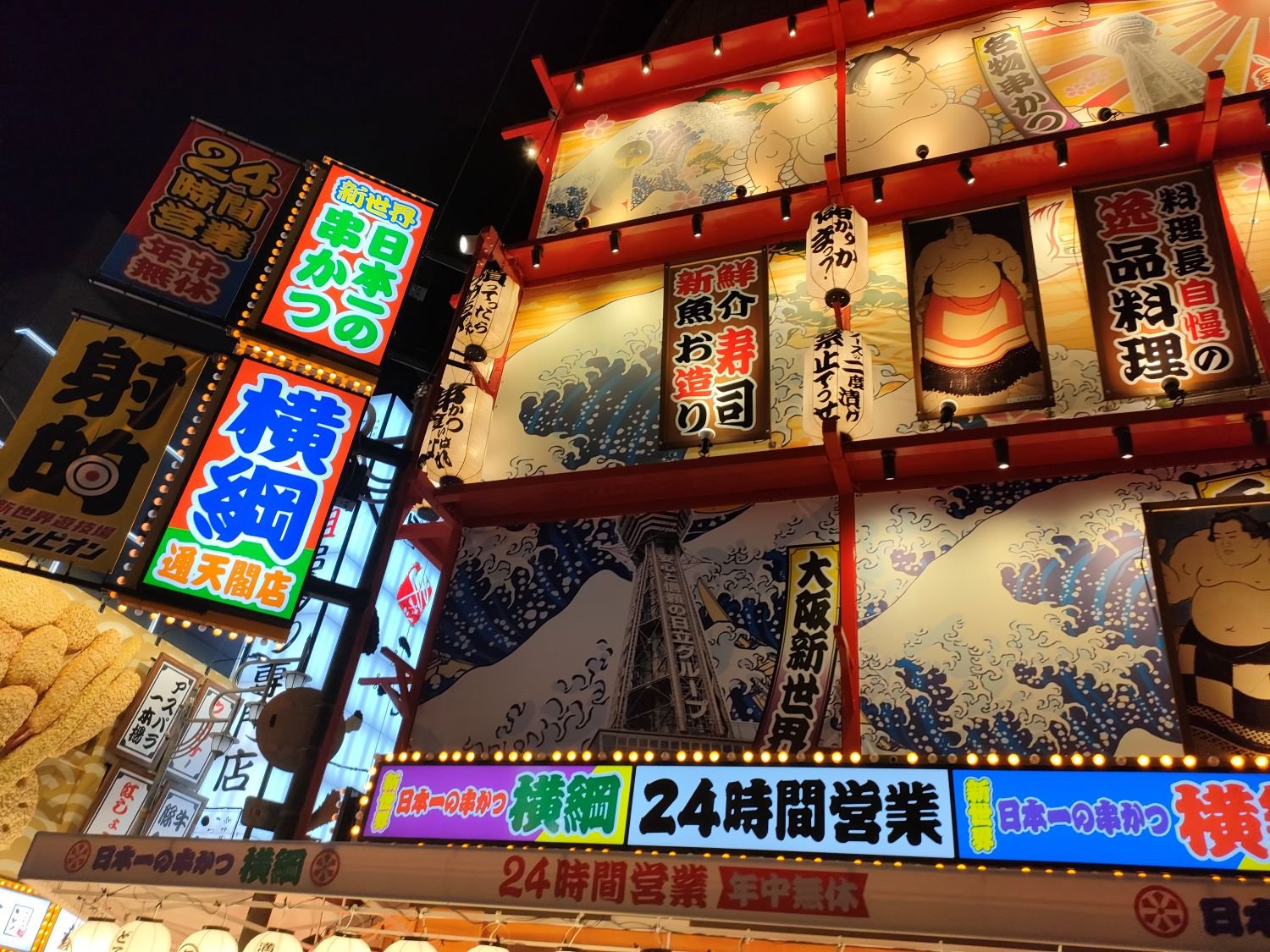
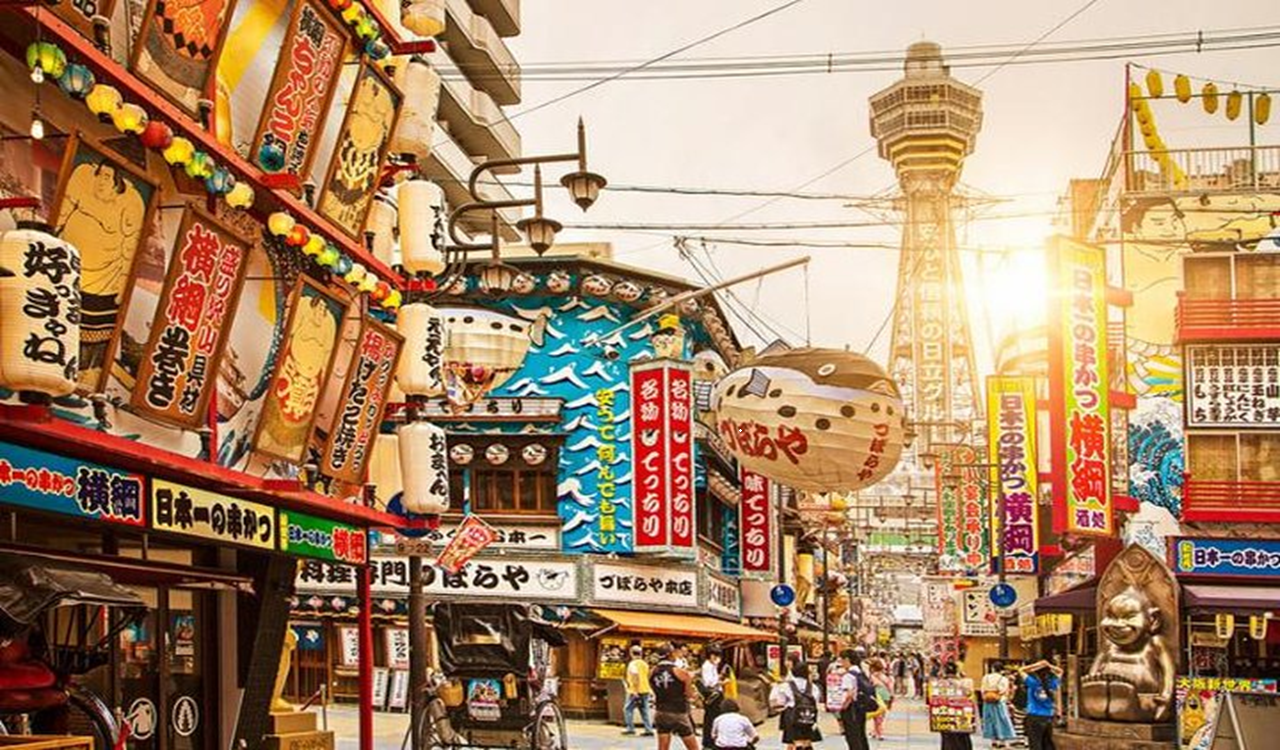
Shinsekai Street Food Discovery: 15 Tastings & 3 Drinks
- Entry ticket
- Mobile voucher
- Valid same day
- Free cancellation
Osaka Food Tour — Guided Culinary Walks Through Dotonbori
Takoyaki stalls to hidden izakaya, fifteen dishes in one evening
Compare fares, pick the fit — all bookings are mobile-voucher and eligible for free cancellation where shown.
3 hr
3 hr
3 hr
| Experience | Duration | Rating | Lunch | Guide | Small group | Free cancel. | Price | |
|---|---|---|---|---|---|---|---|---|
|
Standard Entry
Most popular
Shinsekai Street Food Discovery: 15 Tastings & 3 Drinks
|
3 hr | ★ 4.9 | — | ✓ | — | ✓ | $83 | Book → |
|
Standard Entry
Osaka Shinsekai Food Tour: 15 Dishes & 3 Drinks
|
3 hr | ★ 4.8 | ✓ | ✓ | ✓ | ✓ | $83 | Book → |
|
Guided Experience
Shinsekai Street Food Walking Tour
|
3 hr | ★ 4.8 | — | ✓ | ✓ | ✓ | $64 | Book → |
Professional guides provide deep culinary context, while self-paced wandering allows for personal discovery; most visitors find the organized osaka food tour more efficient for uncovering hidden gems.
|
Top pick Osaka Food Tour |
Self-Guided Food Crawl | |
|---|---|---|
| Expert Commentary | Live historical and culinary insights | None available |
| Navigation Assistance | Guided path through Dotonbori alleys | Map-reliant independent navigation |
| Budget Flexibility | Fixed cost including curated tastings | Pay-as-you-go per item |
| Crowd Management | Priority access and group logistics | Independent management of crowds |
| Cultural Context | Deep dive into Japanese gastronomy | Observation-based learning |
| Accessibility | Support for dietary requirements | Self-managed dietary choices |
| See tickets & prices |
Verdict: Choose an osaka food tour tour if you value curated expertise, but opt for the self-guided route if you prefer complete autonomy while purchasing your osaka food tour tickets for individual street snacks.
Hand-picked experiences loved by thousands of travelers
2 hours 30 minutes
Free Cancellation
Explore Osaka's culinary heart with a local guide, sampling a dozen authentic dishes at hidden izakayas.
3 hours
Free Cancellation
Dive into Osaka's backstreet izakaya scene with 13 dishes, 5 stops, and zero tourist traps.
4 hours
Free Cancellation
Learn to cook authentic Osaka comfort food, from market shopping to sit-down feast with sake pairings.
2 hours
Free Cancellation
Sample Osaka's signature street snack at five beloved venues while exploring the city's culinary heritage
3 hours
Free Cancellation
Discover Osaka's culinary soul through three iconic dishes and hands-on cooking in neon-lit neighborhoods
3 hours
Free Cancellation
Explore Osaka's neon-lit food streets and shadowy historic quarters with a local guide who reveals the city's dual identity.
4 hours
Free Cancellation
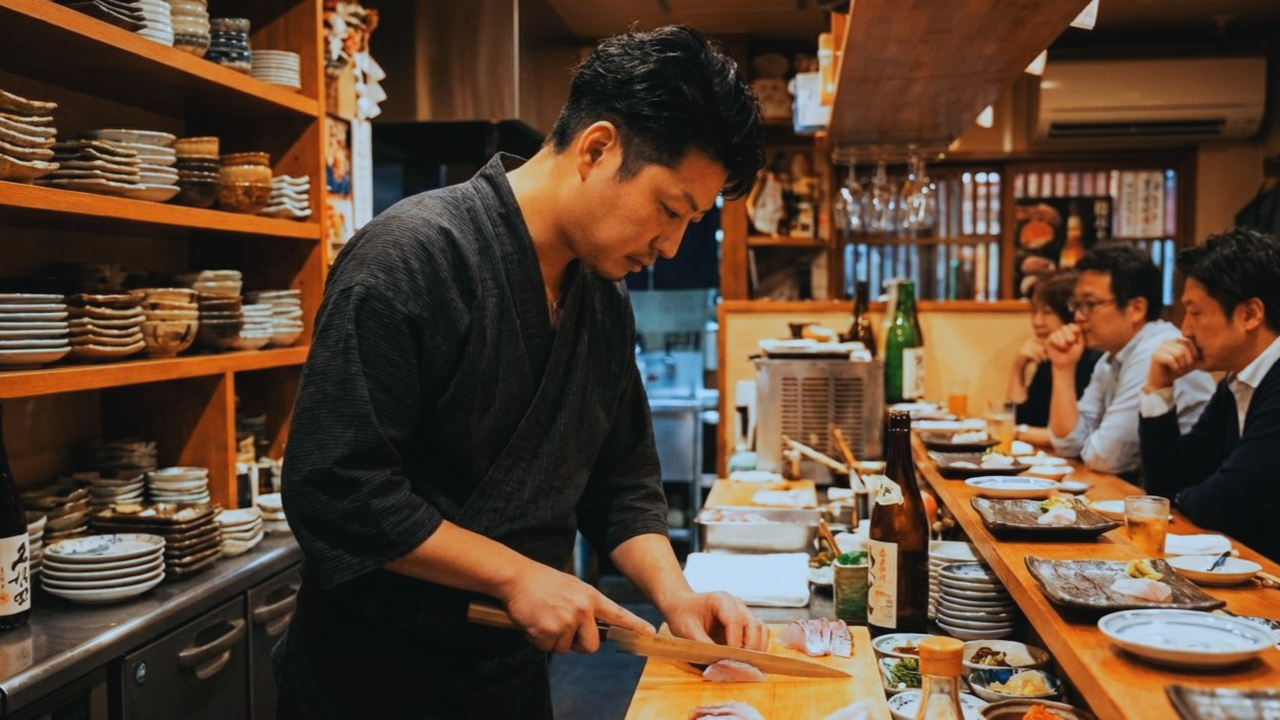
A former pro chef takes you beyond the tourist zones to the restaurants he visits with his own family.
10 hours
Free Cancellation
Explore Kyoto's iconic temples, historic districts, and vibrant markets in a private vehicle with flexible routing
Meet at the landmark and receive an overview of local street food culture.
Sample takoyaki at a historic stall.
Dine at an izakaya within the Dotonbori district.
Try traditional Japanese desserts to conclude your osaka food tour.
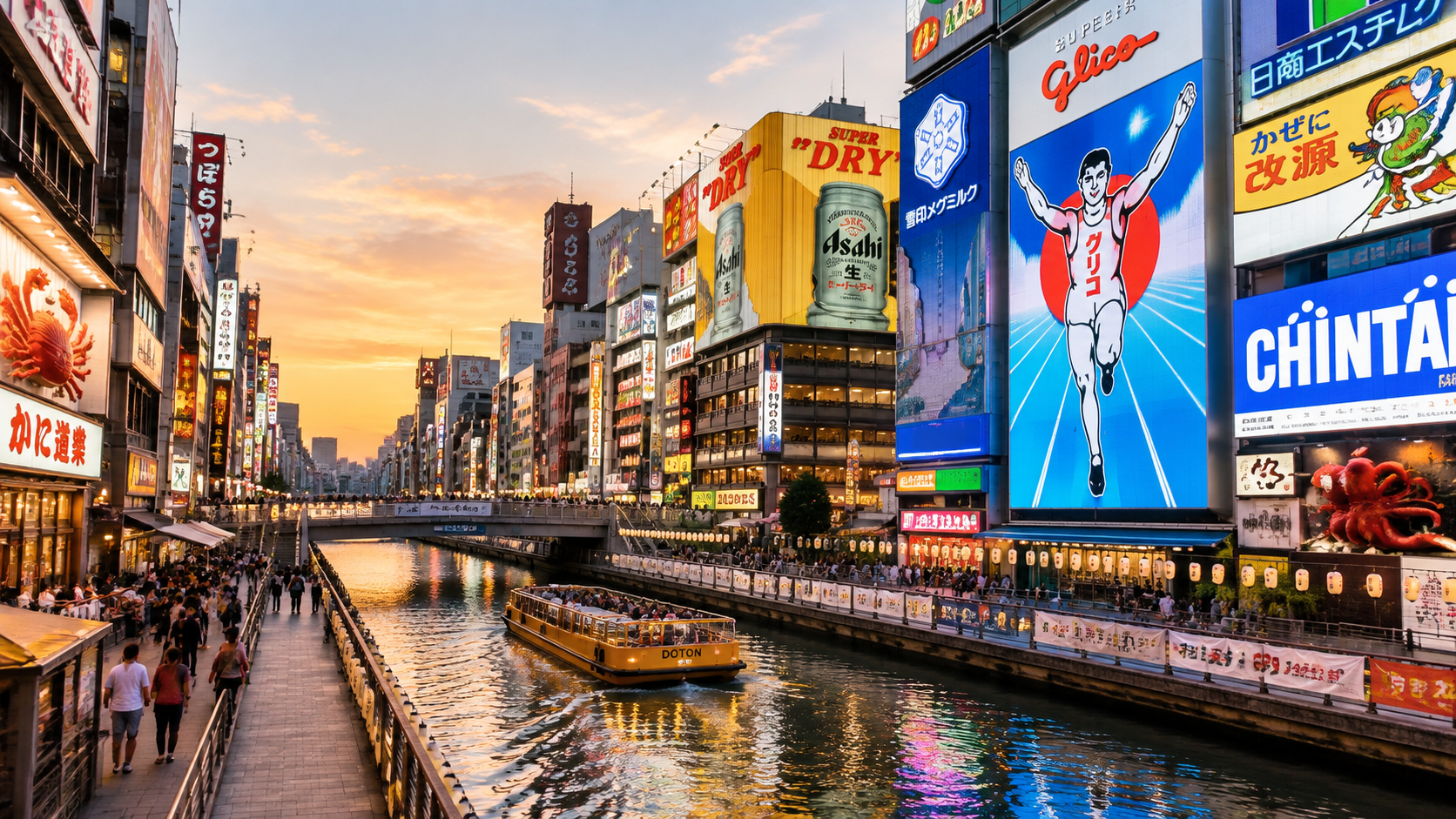
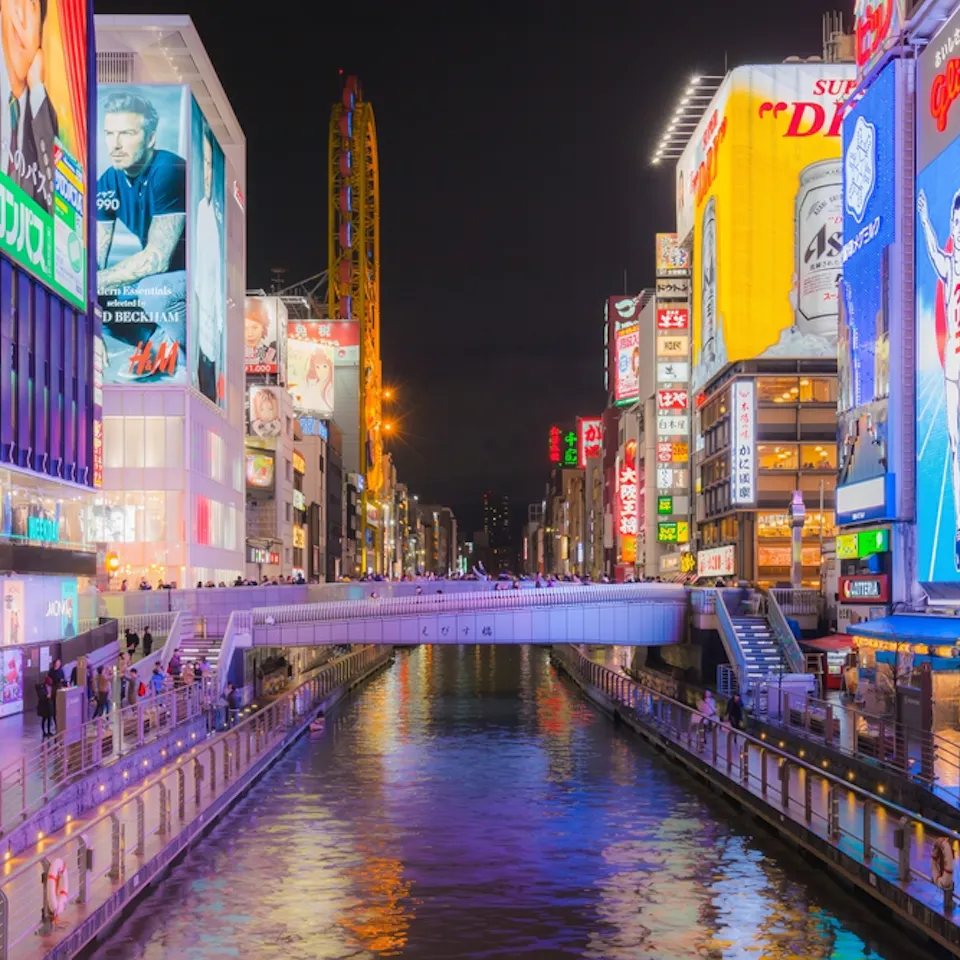
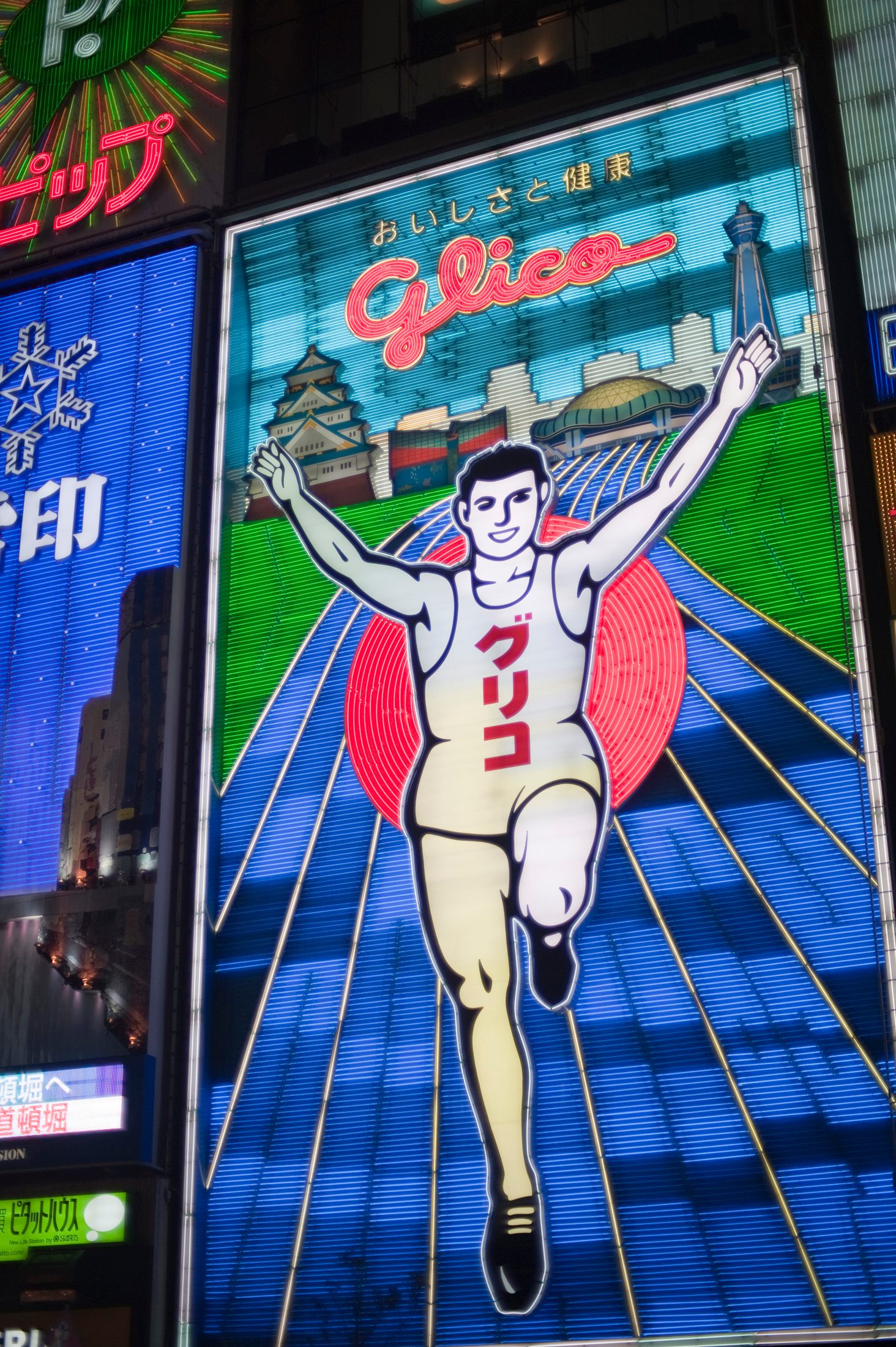
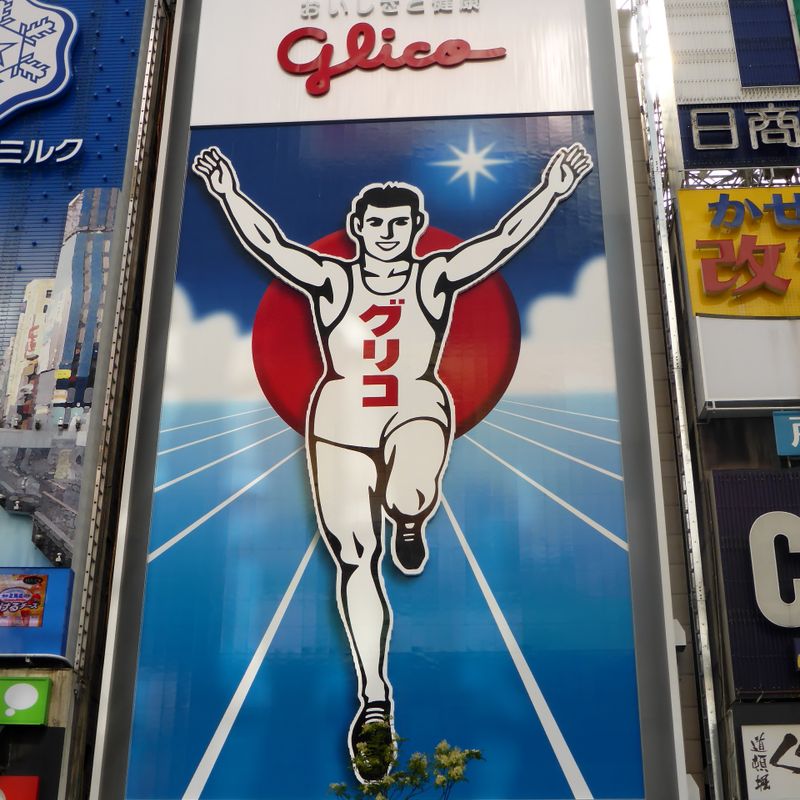
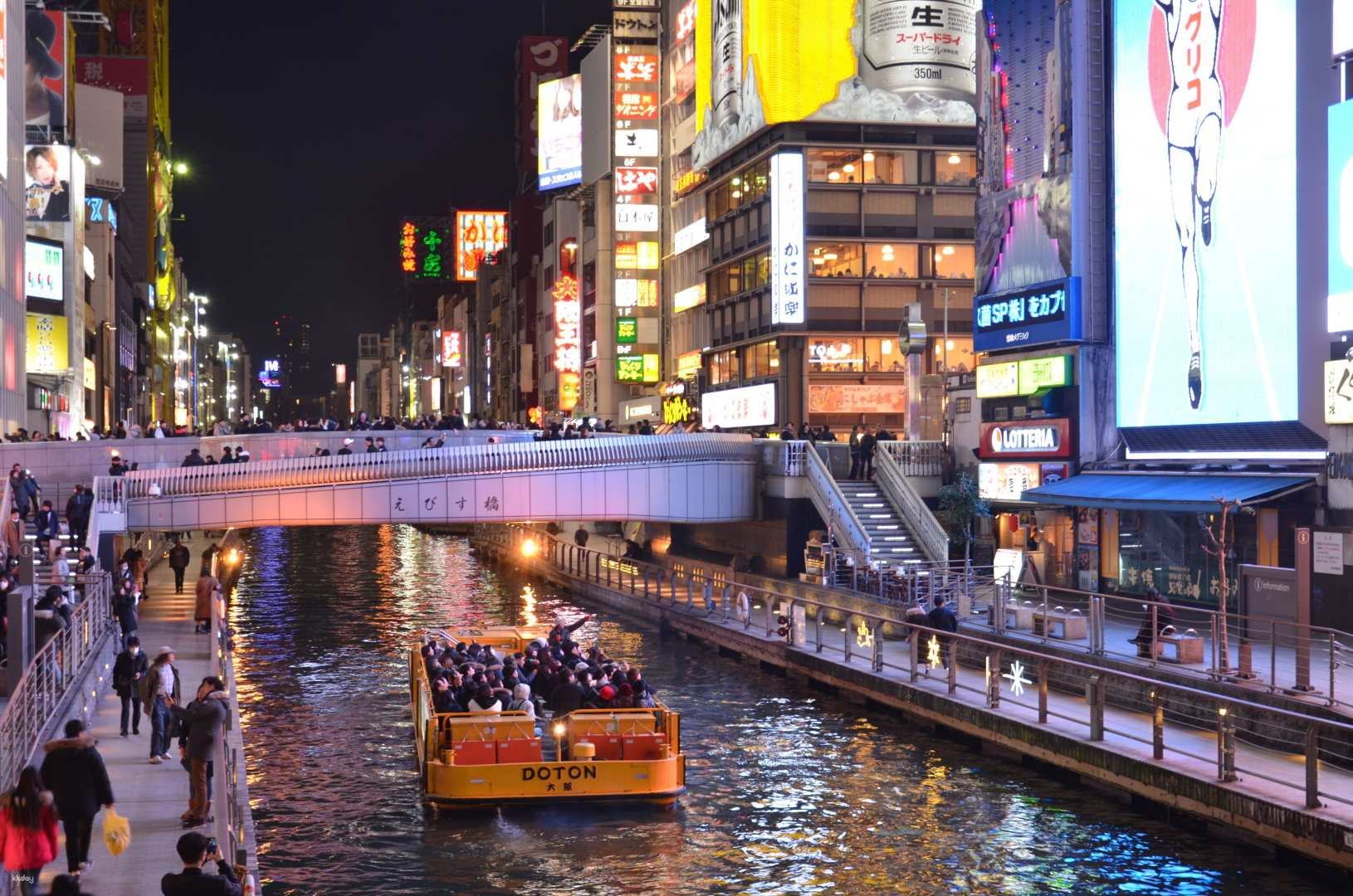
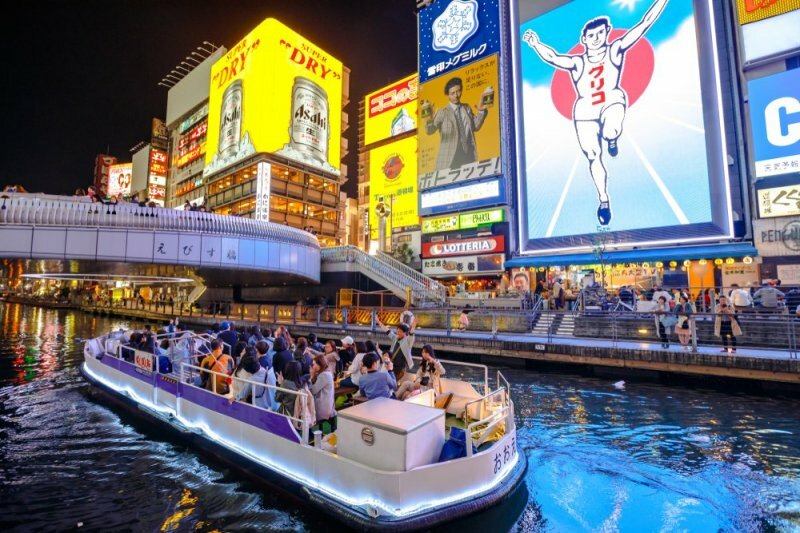
The iconic canal is the heart of the district, featuring the famous Glico Man sign and vibrant neon displays. It serves as a central hub for many local food experiences.
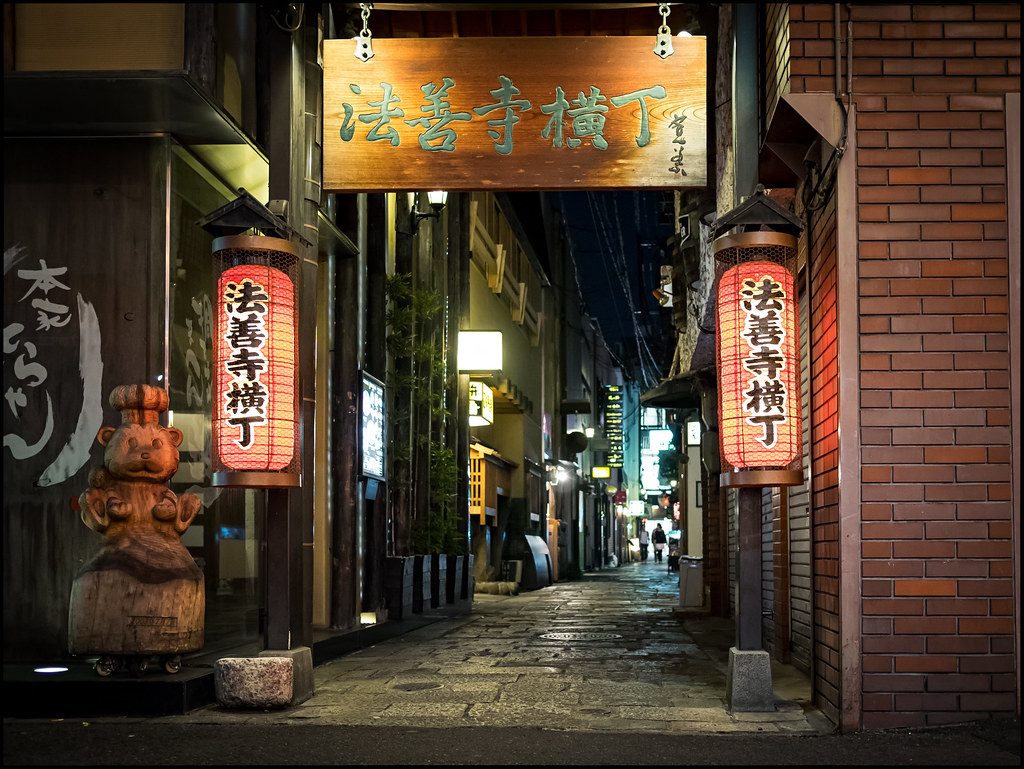
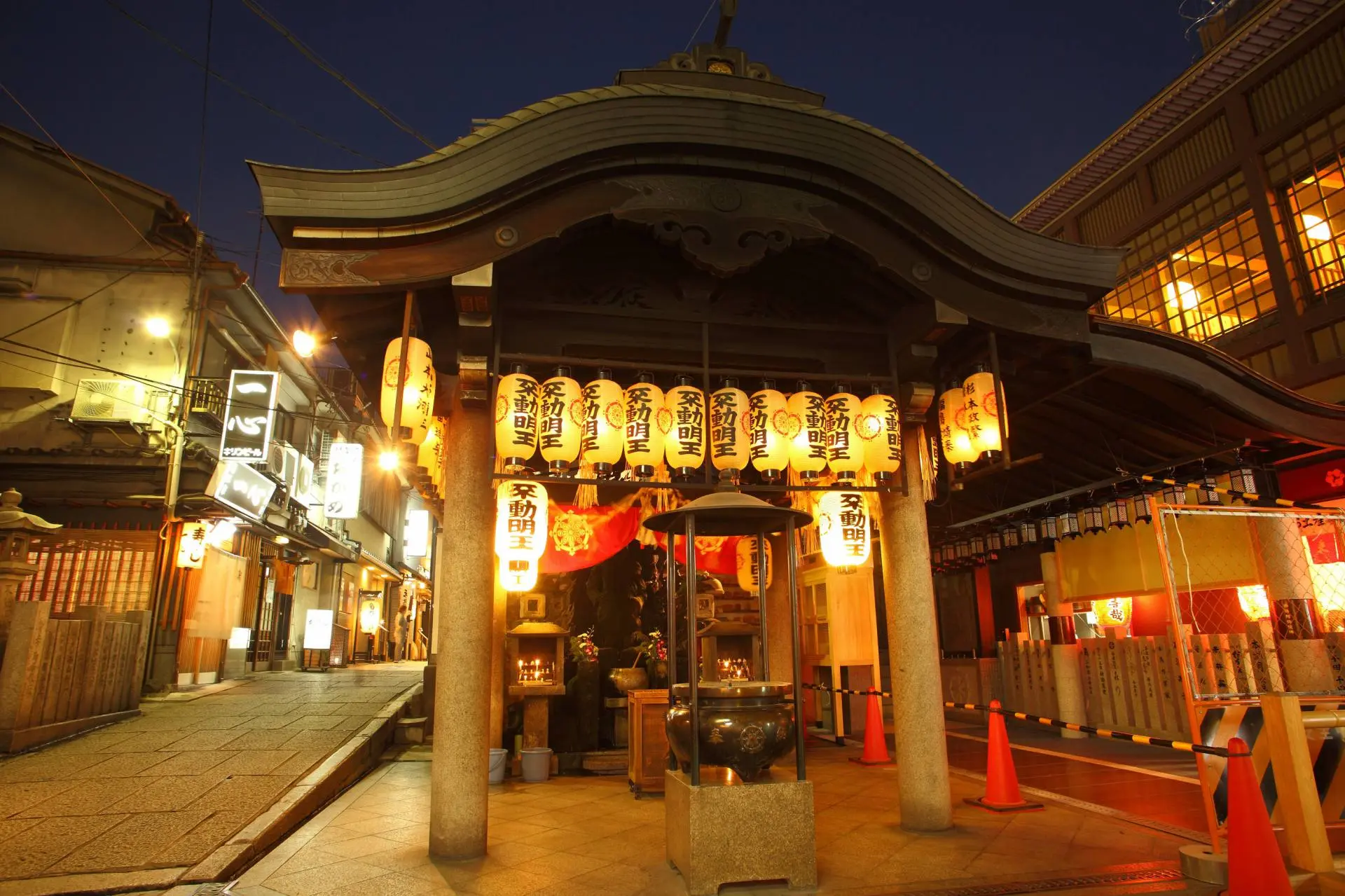
This narrow, cobblestone alleyway provides a stark contrast to the busy main streets. It is home to traditional restaurants and the historic Hozenji Temple.
The most popular gathering spot for visitors, this bridge offers a clear view of the neon signs lining the canal. It is the primary reference point for an osaka food tour.
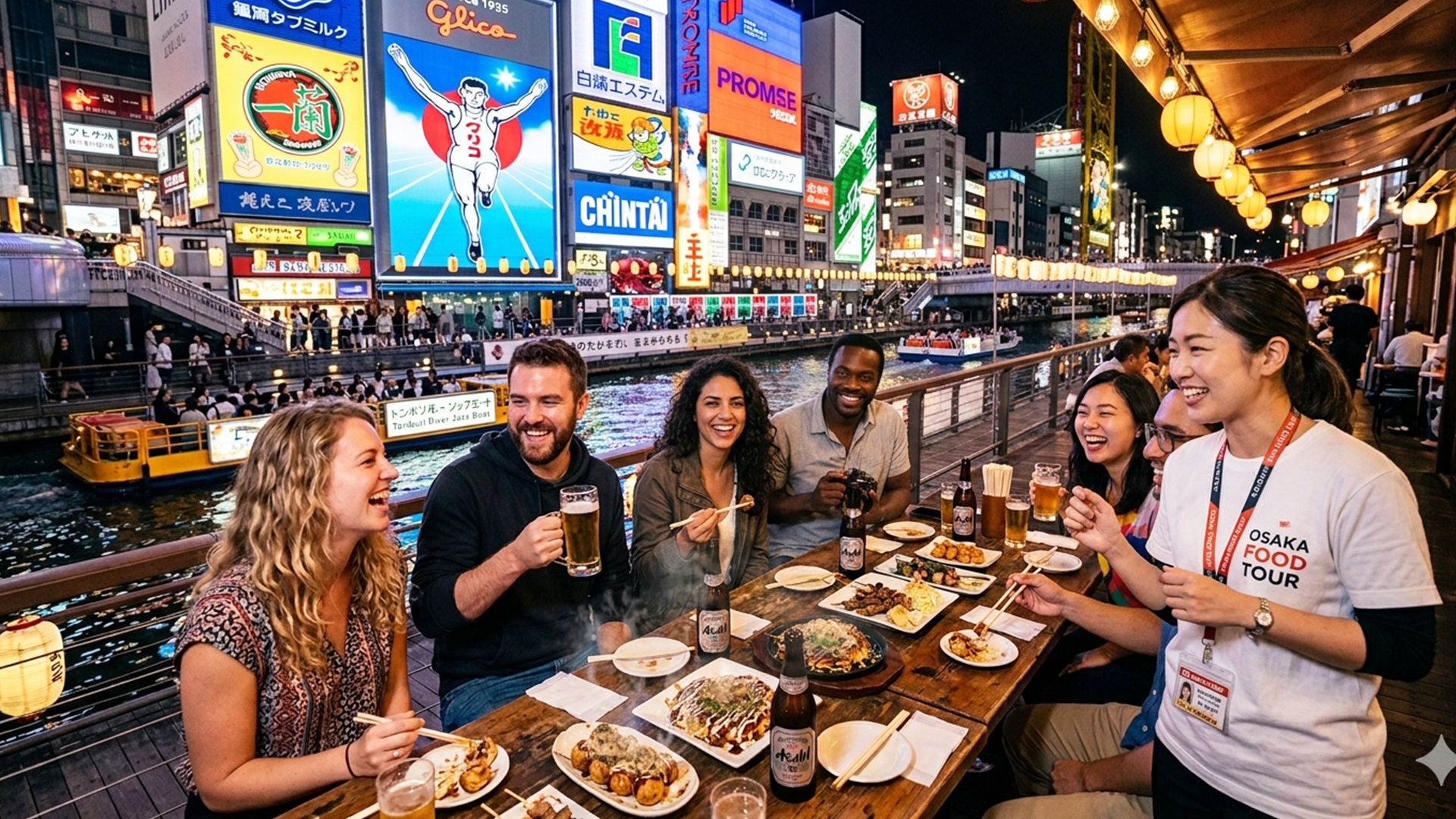
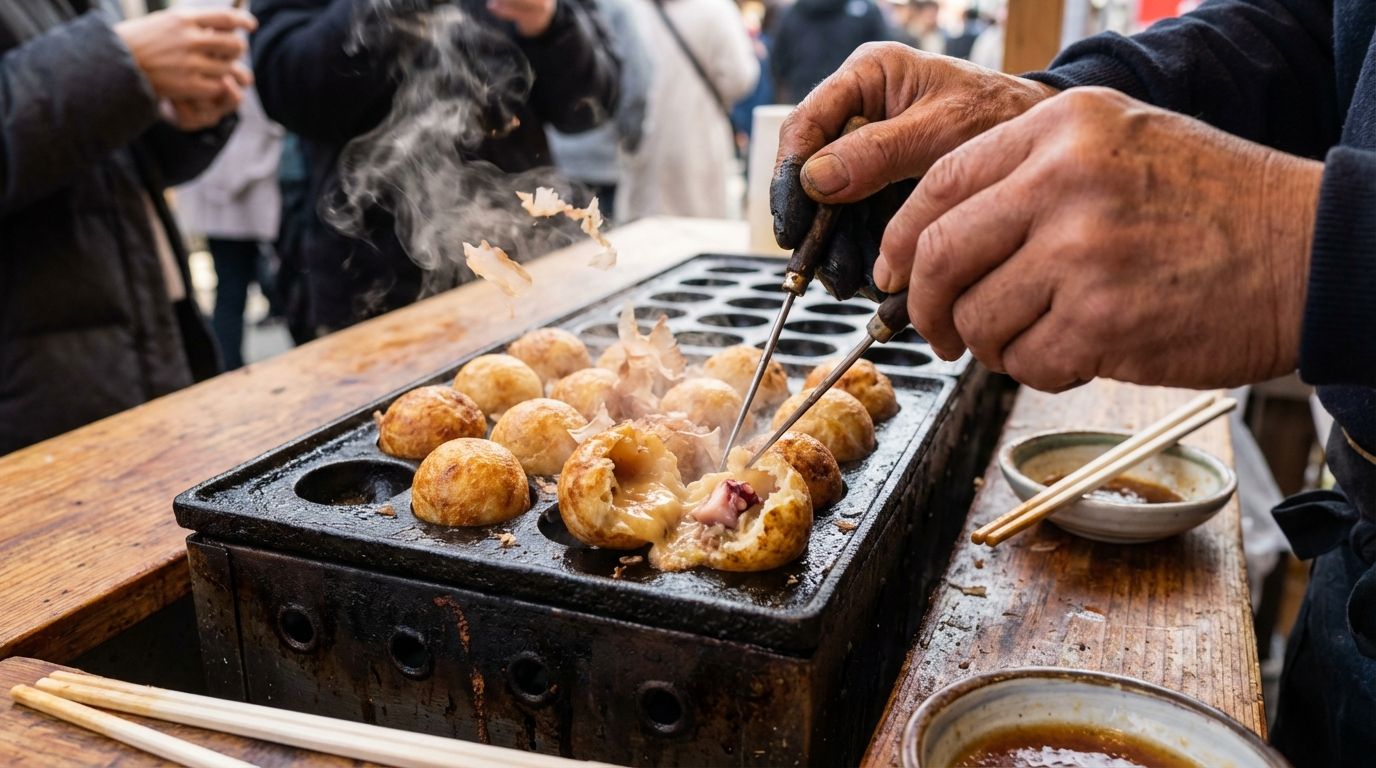
You meet your guide near the Glico sign at dusk, when Dotonbori's neon first overpowers the daylight. The group is small—six to eight guests—and after brief introductions, you walk south into a narrow alley where a takoyaki vendor works a sixty-year-old iron griddle.
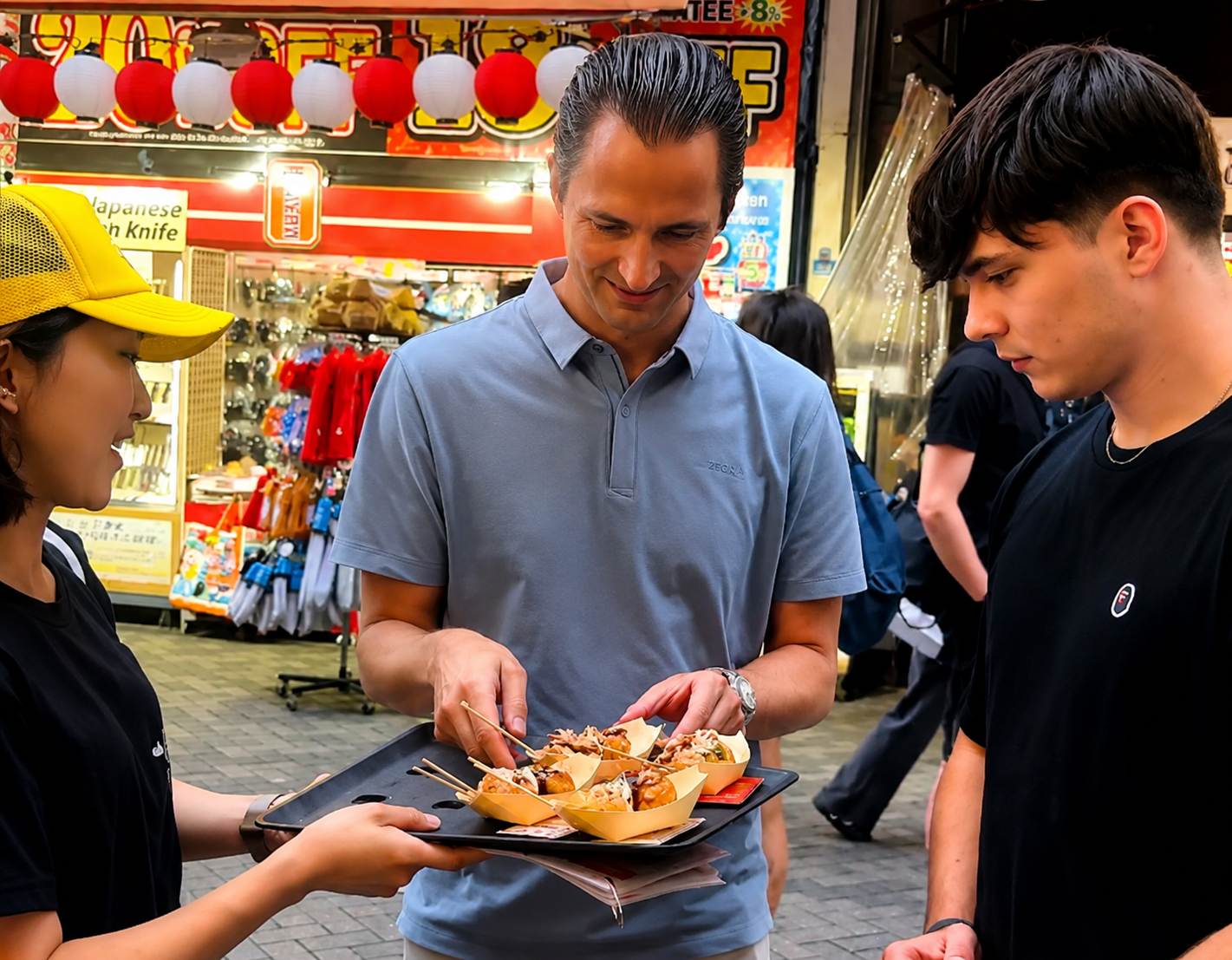
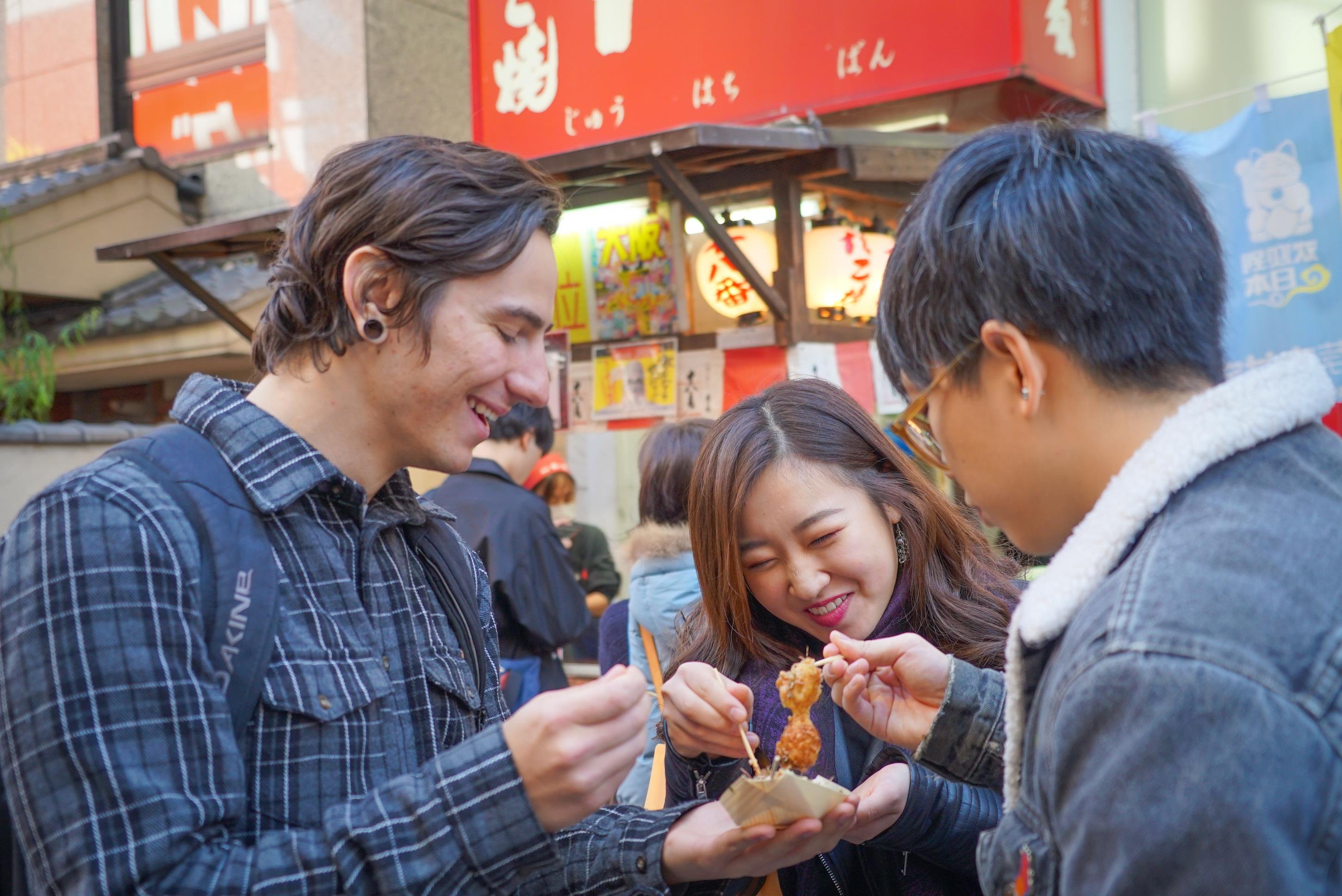
You watch him pour batter, drop in octopus cubes, and spin each ball with two picks until the crust is bronze. You eat them standing, steam rising from the first bite.
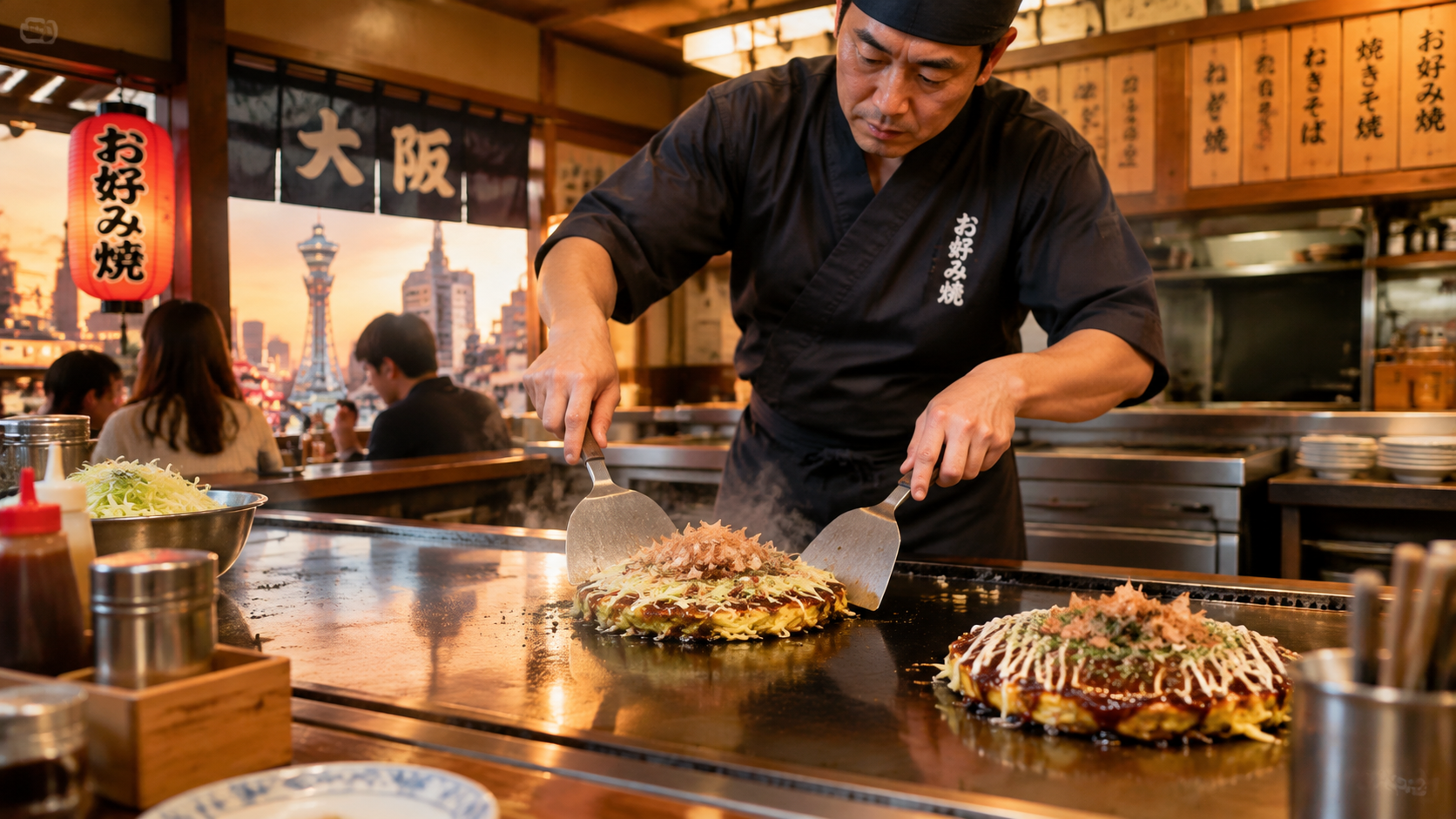
The second stop is an okonomiyaki shop with a teppan griddle built into each table. Your guide orders for the group and explains the layering technique: cabbage first, then batter, pork, and a crosshatch of sauce and mayonnaise. You try flipping your own, under supervision. The third stop is a standing kushikatsu bar in Shinsekai, where the rule—dip once, never twice—is posted in four languages. You work through skewers of lotus root, quail egg, beef, and shrimp, each fried to order.
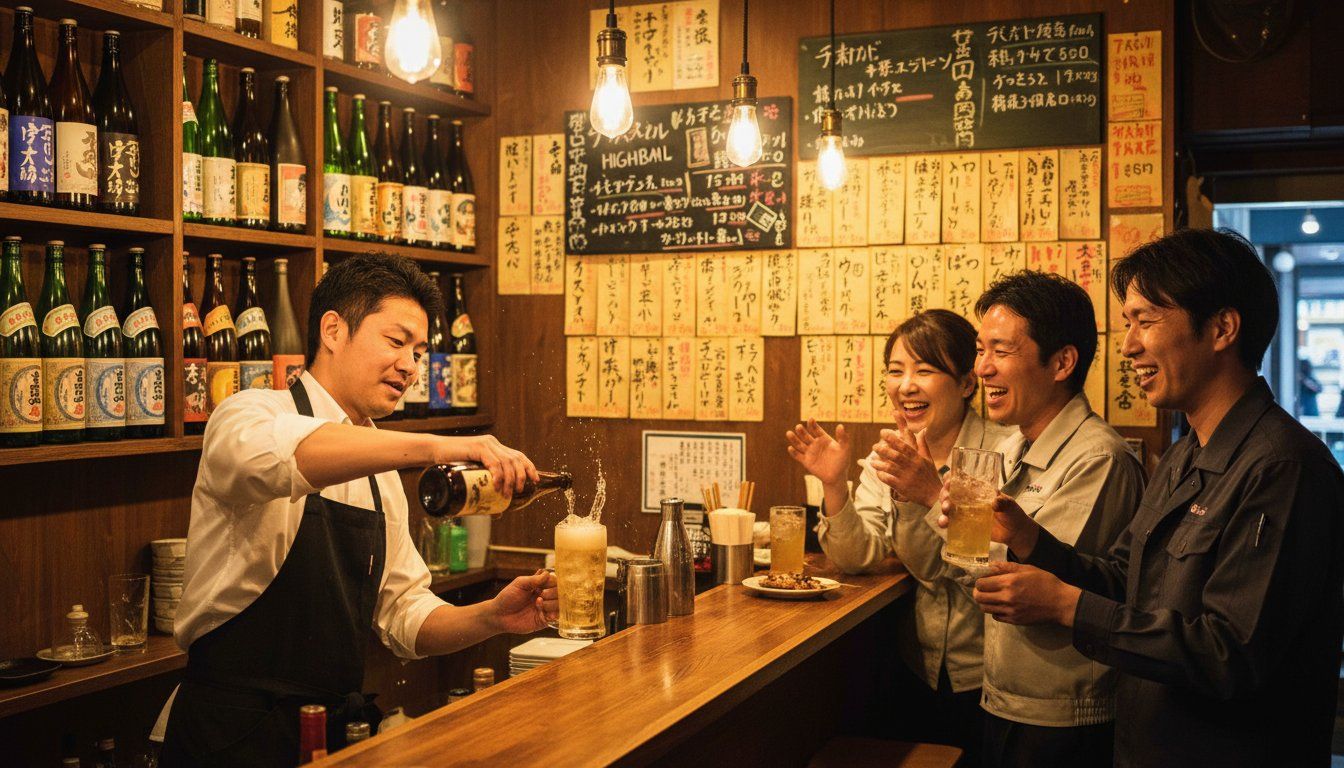
Between stops, your guide points out architectural details: the 1920s tile work, the shrine tucked behind a pachinko parlor, the knife shop that has served chefs since 1946. The tour ends at a small izakaya with house-made tofu and a sake tasting. You leave Namba Station two hundred steps heavier, having covered roughly three kilometers and fifteen dishes in four hours.
All the details about your upcoming adventure in one place
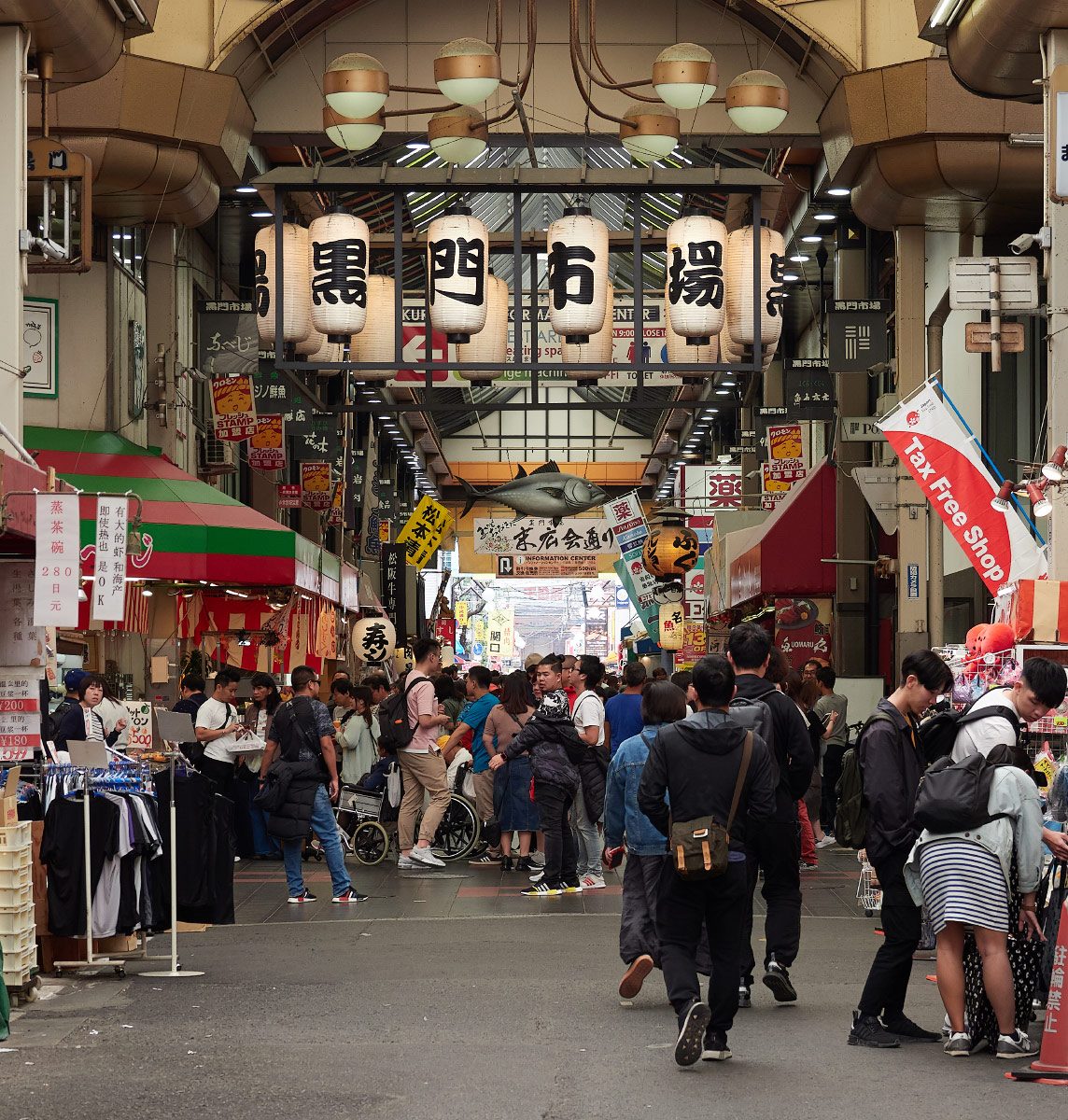
This osaka food tour leads you through Kuromon Ichiba Market, Dotonbori's street-food alleys, and hidden izakaya where locals gather after work. Sample takoyaki, okonomiyaki, kushikatsu, and seasonal sashimi while your guide shares the culinary traditions that define Osaka's kuidaore culture. Every osaka food tour tickets purchase includes tastings at six to eight venues, from century-old stalls to contemporary standing bars.
Osaka earned the nickname "Japan's kitchen" not through imperial decree but through centuries of merchant pragmatism. By the Edo period, the city's river network had made it the nation's rice exchange and wholesale hub, and where commodities flowed, appetites followed.
Dotonbori, the neon-lit canal district that anchors most osaka food tour tours today, was carved in 1612 by entrepreneur Yasui Doton to connect the city's waterways and stimulate commerce. The theaters and teahouses that lined its banks drew crowds, and crowds demanded feeding. Street vendors sold skewered meats, fried dumplings, and quick rice bowls to theatregoers who had neither time nor coin for formal dining. That appetite for speed, flavor, and value never left.
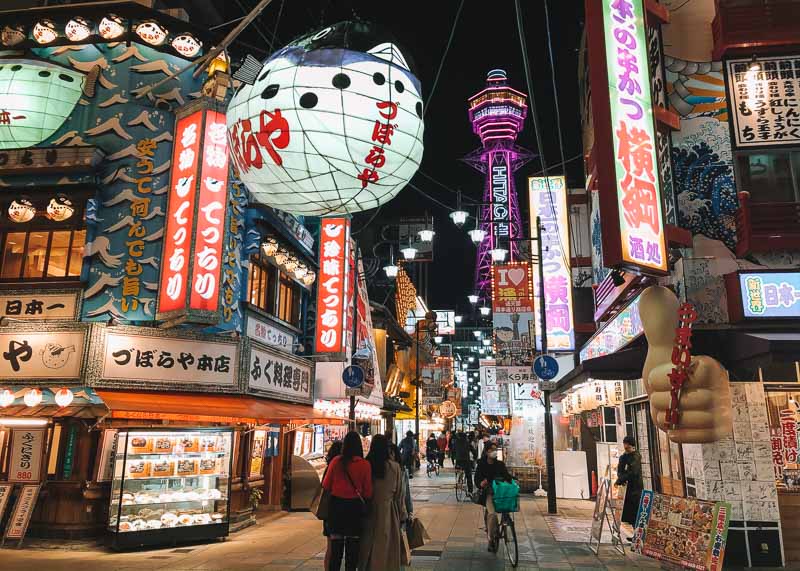
Modern Osaka remains Japan's most food-obsessed metropolis. The city consumes more per capita than Tokyo, and locals describe themselves as "kuidaore"—eating themselves into ruin. Dotonbori's mechanized crab, the Glico running man, and the towering blowfish lantern are not kitschy nostalgia but living emblems of a district that has fed millions without pause since the Meiji restoration. Takoyaki, the octopus-filled wheat balls that vendors flip in cast-iron molds, was invented here in 1935. Okonomiyaki, the savory pancake layered with cabbage, pork, and sauce, evolved from wartime austerity into an art form. Kushikatsu, the twice-fried skewers dipped in communal sauce exactly once, became Shinsekai's signature in the 1920s and remains a test of etiquette and restraint.
An osaka food tour typically covers five to seven stops across three to four hours, weaving through Dotonbori's main strip, quieter side alleys, and occasionally into Kuromon Market or Shinsekai. Guides explain not just what you eat but why—the difference between Kansai and Kanto soy sauce, the reason okonomiyaki batter sits overnight, the etiquette of standing bars. The tours reviewed on osaka food tour reddit and osaka food tour tripadvisor emphasize small groups, English-speaking guides, and vegetarian modifications where possible. Several osaka food tours inc operators now offer osaka food tour with kids itineraries that swap sake tastings for juice pairings and shorten the route. Osaka food tour viator and osaka food tour get your guide listings frequently highlight the "15 delicious dishes & 3 drinks at 5 eateries" format, a structure that balances variety with pacing. The city's culinary density makes it possible to sample gyoza, yakiniku, takoyaki, okonomiyaki, kushikatsu, ramen, and matcha dessert within a single evening, all within walking distance of Namba Station.

Locals describe themselves as kuidaore—eating themselves into ruin.
Casual and comfortable clothing is recommended for walking through crowded streets. Sturdy walking shoes are essential for navigating the Dotonbori area.
Guests should carry light day packs as storage is generally not available on an osaka food tour. Keep valuables secure in crowded dining venues.
Photography is generally permitted during an osaka food tour, though individual shop policies may vary. Respect the privacy of local business owners and other patrons.
Family participation in an osaka food tour depends on the operator and dietary restrictions of children. Most tours are best suited for older children comfortable with Japanese cuisine.
Navigating the busy narrow alleys of the district can be challenging for those with limited mobility. Check with your specific provider regarding wheelchair access for your osaka food tour.
External food and drink are prohibited, as the local gastronomy tour focuses on sampling items provided by the guide. Inform your provider of allergies before the start of your osaka food tour.
Opening Hours
00:00–23:59
Address
Dotonbori, Chuo Ward, Osaka, Japan
Accessibility
Varies by operator
Best arrival window
17:00–21:00
Storage
Not provided
Service Type
Private guided experience
Public transport · 10 min · 230 JPY
Take the Midosuji Subway Line to Namba Station. It is a short walk from the station to the Dotonbori area.
Taxi · 20 min · 2000 JPY
Request a drop-off at the Namba or Dotonbori entrance. Heavy traffic in the evening may impact travel duration.
Most private guides require cancellation 48 to 72 hours in advance for a full refund. As this is an independent service, fees are independent of the 0 JPY base site entry.
Recommended time
3-4 hours
To fully enjoy an osaka food tour, allocate several hours to navigate the Dotonbori district while sampling local specialties like takoyaki and okonomiyaki. We recommend arriving during the 17:00–21:00 window to witness the vibrant neon lights when the atmosphere is most energetic. While you do not need to secure osaka food tour tickets for public access, booking private experiences ensures reserved seating at popular eateries. Be prepared for high pedestrian density as evening crowds congregate near the canal, so allow extra time for movement between venues when exploring these Osaka culinary landmarks. Whether you choose group osaka food tour tours or private guided options, a relaxed pace helps manage the narrow lanes.
Crowd levels through the day
Weather · crowds · average price — dots go green to amber to red as each metric rises.
Mild weather and cherry blossoms create a pleasant backdrop for an osaka food tour. Expect moderate crowds and comfortable walking temperatures.
Evenings are lively, though humidity can be high. Hydration is key when participating in an osaka food tour during these months.
This season offers excellent weather, making it the perfect time for an osaka food tour in the Dotonbori district. September and October are particularly comfortable.
Cooler temperatures are ideal for hot street food dishes. The neon lights of the district are especially vivid during the longer, darker nights.
Reserve your osaka food tour in advance, especially during weekends, to secure a spot. Providers often fill up quickly.
Communicate any food allergies clearly to the operator before the osaka food tour begins. Many vendors can adjust offerings if notified ahead of time.
Keep small denominations of JPY on hand for incidental purchases during your osaka food tour. Not all small stalls accept credit cards.
If possible, stay in a hotel near the Namba area to easily reach your osaka food tour meeting point. This minimizes transit stress in the evening.
Pay attention to the local culinary customs explained during your osaka food tour. Understanding etiquette enhances the dining experience.
Stand in the center of the bridge for a clear view of the iconic Glico Man sign and the canal reflection. This is the central hub for any osaka food tour participants looking to capture the neon intensity.
Walk along the path at water level to photograph the colorful signage from a lower perspective. This location provides a unique framing of the restaurant facades and osaka food tour tours atmosphere.
Capture the contrast of traditional stone paths and paper lanterns located just steps away from the bustling district. Many guests securing osaka food tour tickets stop here for a quiet, moody composition.
Use the wide-angle view from the dock to frame the dense concentration of billboards and moving light displays. This vantage point helps document the scale of your osaka food tour tour experience.
Navigating a busy osaka food tour with children requires balancing the excitement of neon lights with practical safety measures in the heart of the city. While the sensory experience is engaging, planning around the crowd density is essential for a smooth family excursion.
The Dotonbori area is crowded and often challenging for strollers; a lightweight carrier is recommended to navigate the dense pedestrian traffic during your osaka food tour tours.
The best arrival window is 17:00–21:00 to see the neon lights, but consider earlier start times if your children have early bedtimes.
Many local vendors offer kid-friendly staples like takoyaki or yakitori, though it is wise to confirm ingredient lists for allergies before purchasing your osaka food tour tour.
Crowds are dense near the canal, so keeping a firm grip on young children is necessary while exploring this iconic Osaka landmark.
As you prepare to book your osaka food tour tickets, ensure the selected route avoids stairs and prioritizes accessible storefronts to minimize fatigue.
Dotonbori serves as the epicenter for those embarking on an osaka food tour, featuring endless street vendors and classic eateries. Finding the best Osaka gourmet tour stops involves navigating the vibrant canal side for authentic flavors near the iconic neon signage.
Famous for takoyaki with a soft, creamy center that draws long lines throughout the evening. This venue is perfect for grabbing a quick portion to enjoy while walking along the canal.
A historic establishment known for its mountain yam-based pancakes that provide a unique texture. Visitors interested in osaka food tour tours often queue here to watch skilled chefs prepare savory dishes on large griddles.
Specializes in deep-fried skewers that are a staple of local culture. Guests should secure their osaka food tour tickets early to ensure a spot at the counter for these crispy snacks.
Offers a diverse menu of teppanyaki-style delights in a spacious setting. It remains a reliable choice for travelers seeking a comfortable sit-down experience in the heart of the district.
Real experiences from real travelers
Our guide took us through five distinct neighborhoods, each stop revealing a different side of Osaka's culinary culture. The kushikatsu in Shinsekai was perfectly crispy, and learning the no-double-dipping rule directly from the chef made it memorable. We finished at a hidden sake bar in Tenma where the owner explained regional brewing traditions while we sampled four varieties.
The osaka food tour exceeded expectations with its focus on small family-run establishments rather than tourist traps. We tried takoyaki made by a third-generation vendor, visited a century-old tofu workshop, and ended with okonomiyaki cooked tableside. Our guide translated menu items and cultural context that would have been impossible to access alone.
Three hours of tasting through Dotonbori and Kuromon Market gave us a complete picture of Osaka street food culture. The yakitori stand visit was a highlight, watching the chef grill each skewer over binchotan charcoal. Portion sizes were generous enough that we skipped dinner afterward.
The culinary walking experience covered eight different dishes across four districts. I appreciated the vegetarian accommodations our guide arranged at each stop. The taiyaki dessert at the end was a sweet finish, though I wished we had spent more time at the fish market.
Joined an evening osaka food tour that focused on izakaya culture in the Kyobashi area. Each small plate came with stories about ingredient sourcing and preparation techniques. The grilled mackerel was exceptional, as was the highball pairing recommendation from our guide.
Our guide balanced tastings with historical context about each neighborhood we visited. The okonomiyaki stop included a hands-on cooking lesson, and the ramen shop visit revealed how Osaka style differs from Tokyo tonkotsu. Walking between locations helped work up an appetite for the next course.
This osaka food tour tickets purchase was the smartest decision of our trip. We sampled kushikatsu, gyoza, takoyaki, and three types of grilled seafood while learning about post-war food culture and the merchant traditions that shaped Osaka cuisine. The guide's English was excellent and her passion for local food was infectious.
The evening departure allowed us to experience the neon energy of Dotonbori while sampling from six different vendors. Our guide knew which stalls had the shortest waits and the best quality. The grilled squid near the canal was unforgettable, as was the matcha soft-serve finale.
Appreciated how the osaka food tour tour avoided the most crowded tourist spots while still hitting iconic dishes. The motsunabe hotpot stop was a revelation, and the guide explained each offal cut as we cooked it ourselves. Finished with nama chocolate from a local chocolatier that doesn't advertise to foreigners.
Three and a half hours of eating through backstreet restaurants and market stalls gave us confidence to explore on our own later in the trip. The teppanyaki demonstration, sake tasting, and street food sampling were all expertly paced. Our guide's recommendations for follow-up visits were spot-on.
Everything you need to know for your journey
While individual tour operators set their own schedules, the Dotonbori district is open 00:00–23:59. Most tours coincide with the recommended 17:00–21:00 arrival window.
Accessibility varies by provider, as many venues in the Dotonbori area feature narrow, multi-level seating. Check with the specific operator of your osaka food tour for details.
No, your osaka food tour includes a curated selection of local dishes. Bringing external food is generally not allowed at the dining venues.
Yes, photography is usually welcome during an osaka food tour. Ensure you capture the neon lights at the Dotonbori district while respecting local diners.
The best arrival window for your osaka food tour is 17:00–21:00. This ensures you experience the peak atmosphere of the district.
Wear comfortable walking shoes and casual layers for your osaka food tour. You will spend significant time walking through the bustling Dotonbori district.
Family-friendliness depends on the specific osaka food tour operator. Ensure the planned menu and pacing are appropriate for the children in your group.
The district is easily accessible via the Midosuji Line to Namba Station. Follow your confirmation email for the exact meeting landmark location.
Cancellation policies are determined by the individual private operator. Many allow full refunds if requested 48 to 72 hours before your osaka food tour.
A quiet, historic Buddhist temple tucked away from the main streets. Known for its moss-covered statue.
Various options ranging from budget hostels to high-end hotels within walking distance of the tour meeting point.
Join thousands of happy travelers who have discovered this incredible experience
Book Your Experience Now