3 hr
Shinsekai Street Food Evening: 15 Dishes & 3 Drinks
- Entry ticket
- Mobile voucher
- Valid same day
- Free cancellation
Osaka Food Tour Night — Evening Street Food & Dotonbori Walks
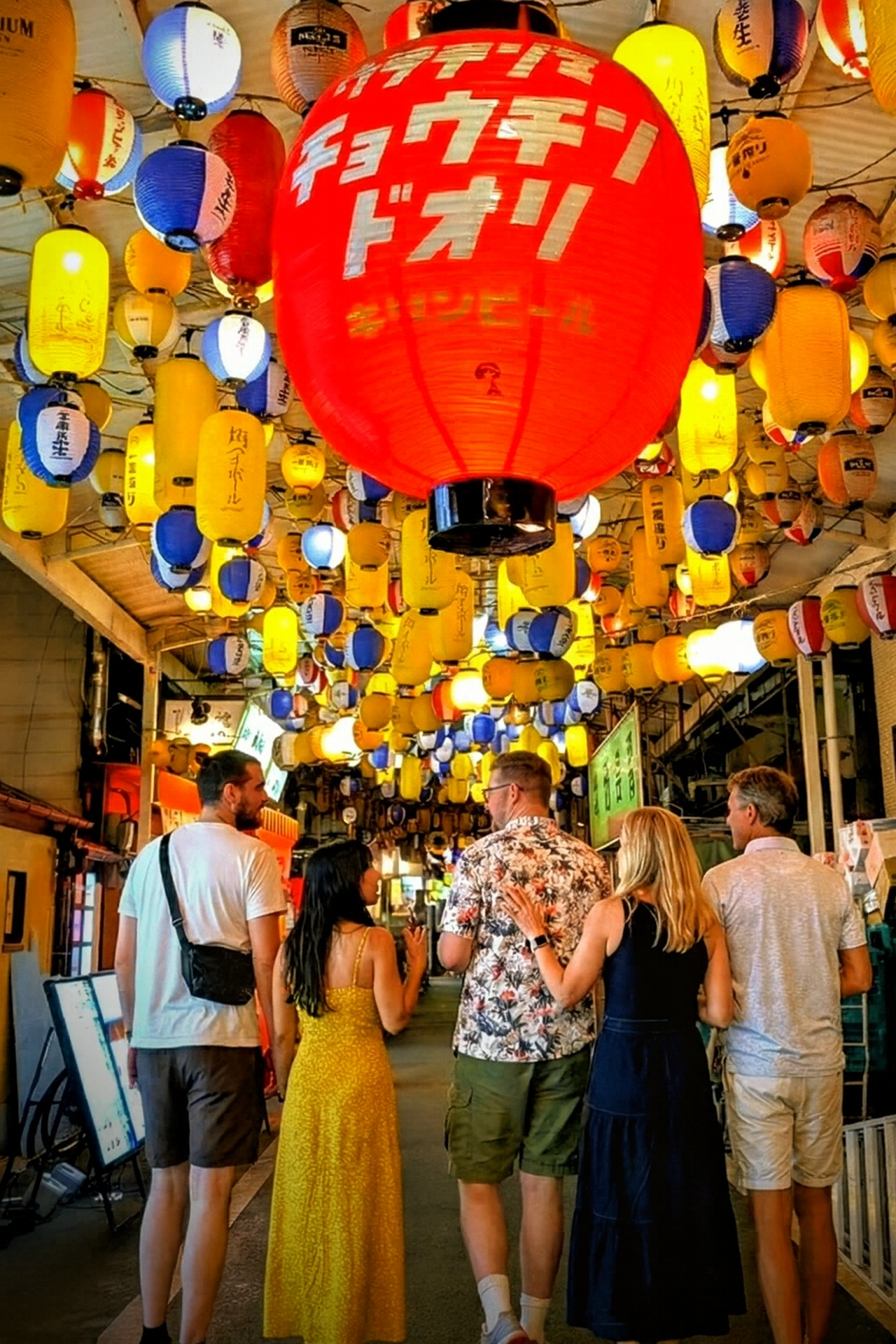
Neon-lit alleys and fifteen dishes, kushikatsu smoke rising under lanterns.
Compare fares, pick the fit — all bookings are mobile-voucher and eligible for free cancellation where shown.
3 hr
3 hr
3 hr
Choosing the right osaka food tour night depends on your preference for group interaction and the specific districts you wish to explore. These osaka food tour night tours provide expert curation through vibrant neighborhoods, ensuring you experience the best of local evening illumination and authentic street food.
|
Top pick Group Walking Tour Shared Experience |
Private Food Tour Tailored Itinerary | |
|---|---|---|
| Duration | 3 Hours | 3-4 Hours |
| Tastings Included | 12-15 Dishes | 15+ Dishes |
| Drinks Included | 2-3 Local Drinks | Customizable Selection |
| Navigation | Expert Local Guide | Dedicated Personal Guide |
| Best for | First-time visitors | In-depth culinary exploration |
| See tickets & prices |
Verdict: For most visitors seeking a balanced introduction to nightlife landmarks, the standard group osaka food tour night tickets offer the best value.
Worth it for food lovers and nightlife seekers
An osaka food tour night delivers exceptional value for anyone wanting to explore Osaka's street food culture without the research overhead. The bookable walking experiences guide you through Shinsekai and Dotonbori after dark, covering 12–15+ dishes plus drinks—far more than most visitors would confidently navigate solo. You'll taste takoyaki, kushikatsu, okonomiyaki, and regional specialties while a local guide explains vendor etiquette and neighborhood history. The evening timing captures neon-lit streets at their most atmospheric, when izakayas fill and food stalls hit peak energy. Tours typically run 2.5–3 hours, cost-effective given the dish count and the fact that Shinsekai requires no entrance fee but benefits enormously from insider knowledge. Skip if you're an adventurous solo eater fluent in Japanese or prefer formal dining over street vendors, but for most travelers these Osaka food tour night tours turn scattered snacking into a structured culinary narrative with zero navigation stress.
Bottom line: If you want efficient access to Osaka's best street food with evening energy and expert context, osaka food tour night tickets are among the most cost-effective culinary investments in the city.
They complement each other; most visitors who do both call the guided osaka food tour night the more immersive choice for Dotonbori nightlife dining, while self-guided walks offer total independence.
|
Top pick Guided Tour |
Self-Guided | |
|---|---|---|
| Cultural Insight | Historical context provided by experts | Limited to personal research |
| Access to Hidden Venues | Exclusive local izakaya and back-alley spots | Public street-level access only |
| Language Support | Multilingual guides translate menus | Dependent on personal Japanese skills |
| Flexibility | Fixed departure and group pace | Completely adjustable itinerary |
| Cost Structure | All-inclusive booking fee | Pay-as-you-go street food expenses |
| Pacing | Curated flow for evening neon lights | Determined entirely by your preference |
| See tickets & prices |
Verdict: Choose these osaka food tour night tours for deep local knowledge, or opt for self-guided osaka food tour night tickets if you prefer to curate your own evening culinary experience at your own speed.
Hand-picked experiences loved by thousands of travelers
2 hours 30 minutes
Free Cancellation
Explore Osaka's culinary scene with a local guide, sampling authentic dishes at hidden izakayas
3 hours
Free Cancellation
Small-group evening through Tenma and Kyobashi's authentic izakaya scene with a local guide
3 hours
Free Cancellation
Discover authentic Osaka cuisine in hidden alleys where locals eat, drink, and gather after dark.
3 hours
Free Cancellation
Savor Osaka's legendary street food scene through three iconic dishes and hands-on cooking
4 hours
Free Cancellation
Explore Osaka's vibrant nightlife district with a canal cruise, takoyaki tasting, and izakaya dinner
2 hours
Free Cancellation
Sample octopus balls at five renowned establishments and discover the nuances of Osaka's signature street snack
3 hours 30 minutes
Free Cancellation
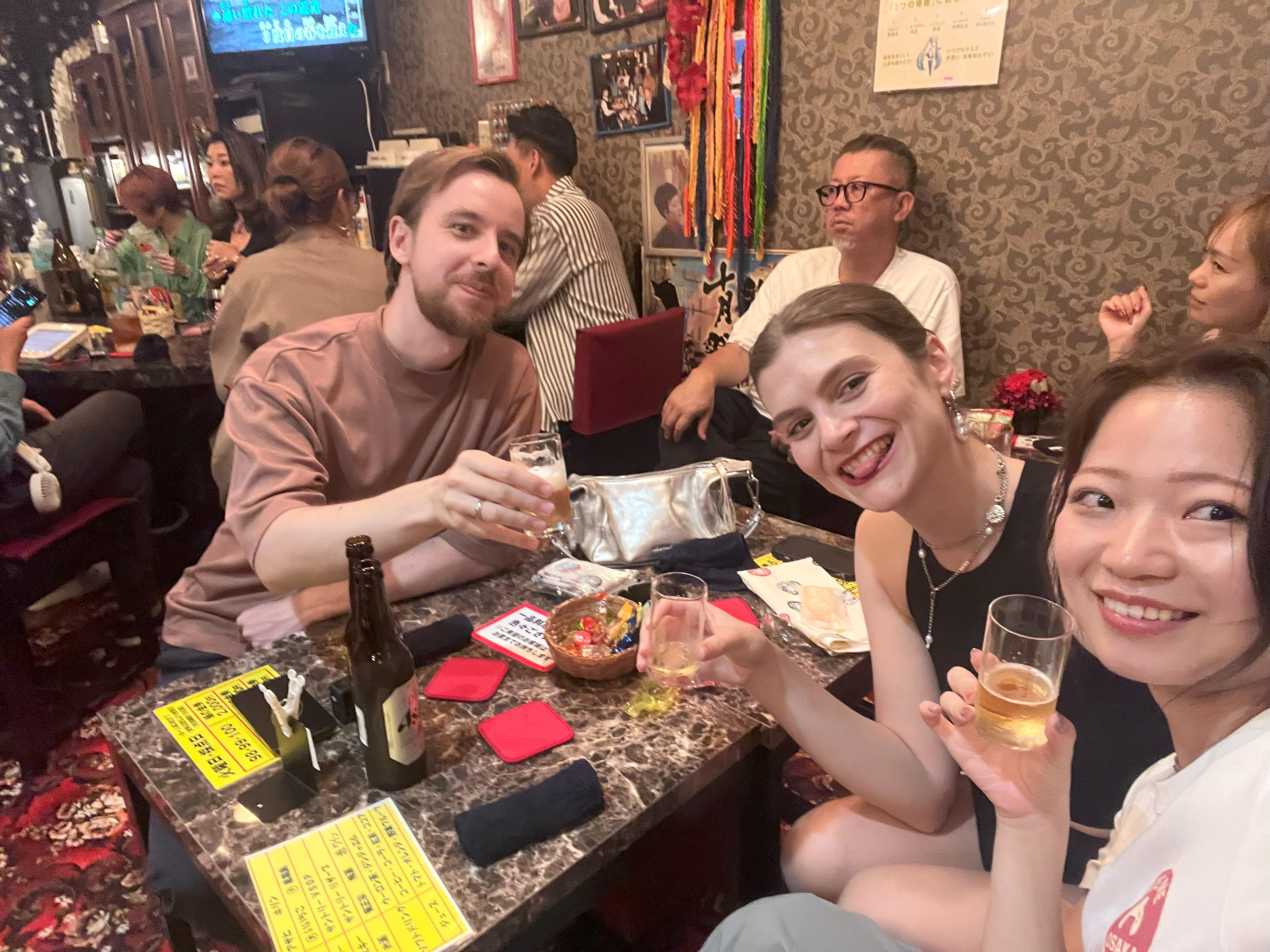
Dive into Osaka's after-dark culture with a local guide through backstreet bars, izakayas, and karaoke rooms.
10 hours
Free Cancellation
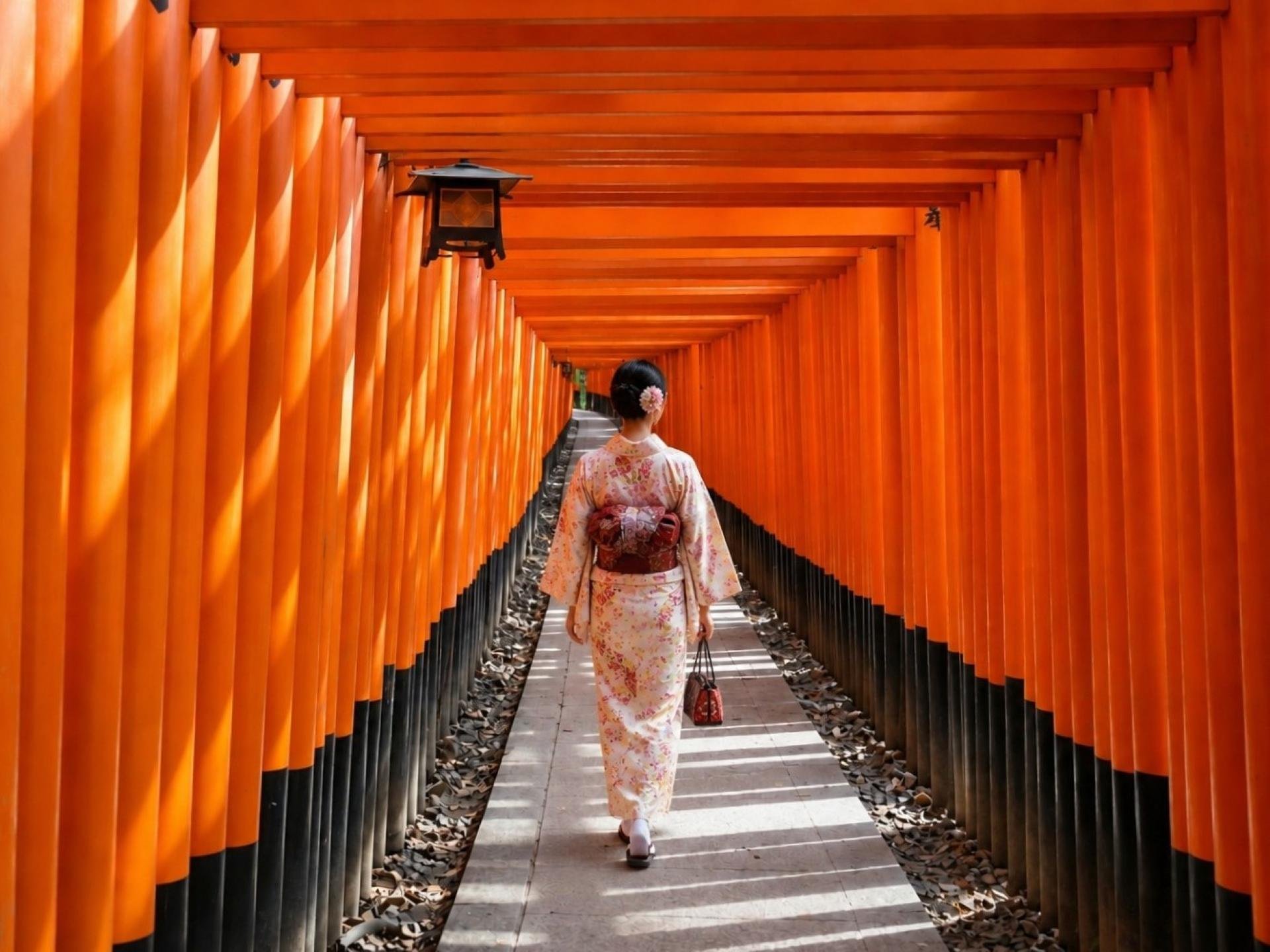
Discover Kyoto's iconic temples, traditional districts, and culinary heart on a flexible private tour
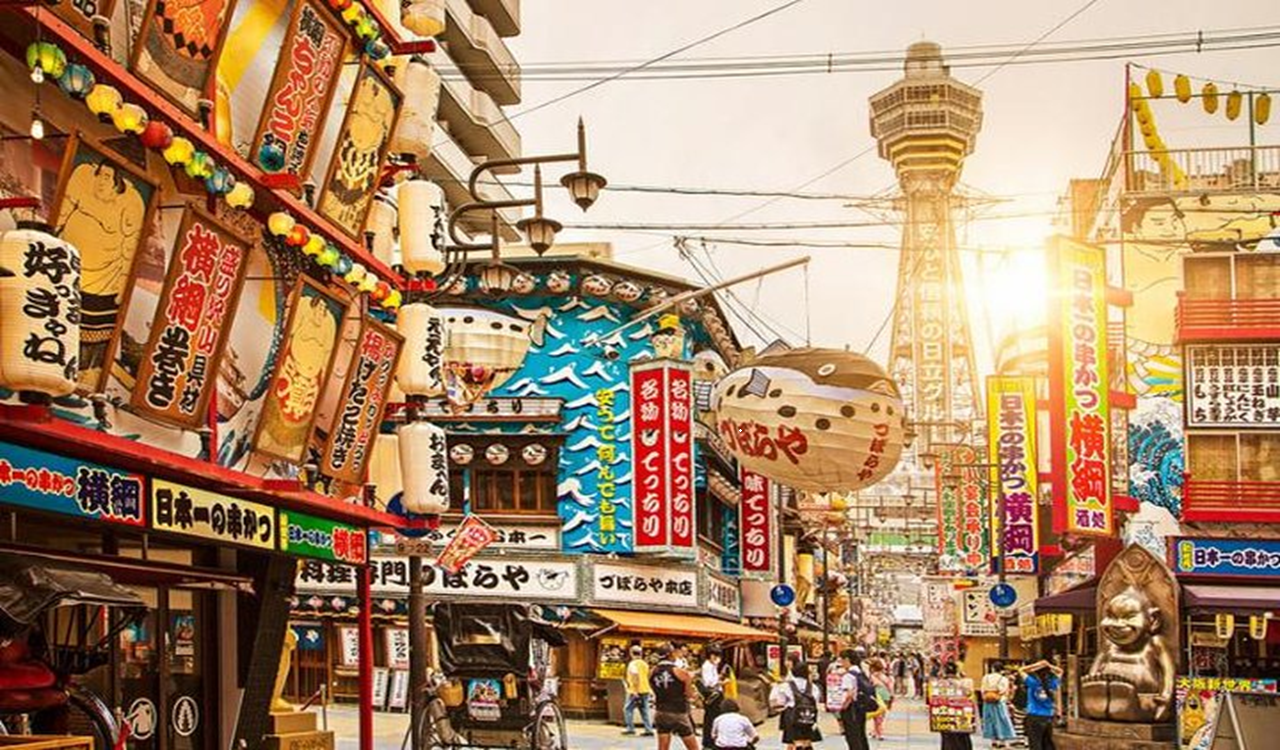
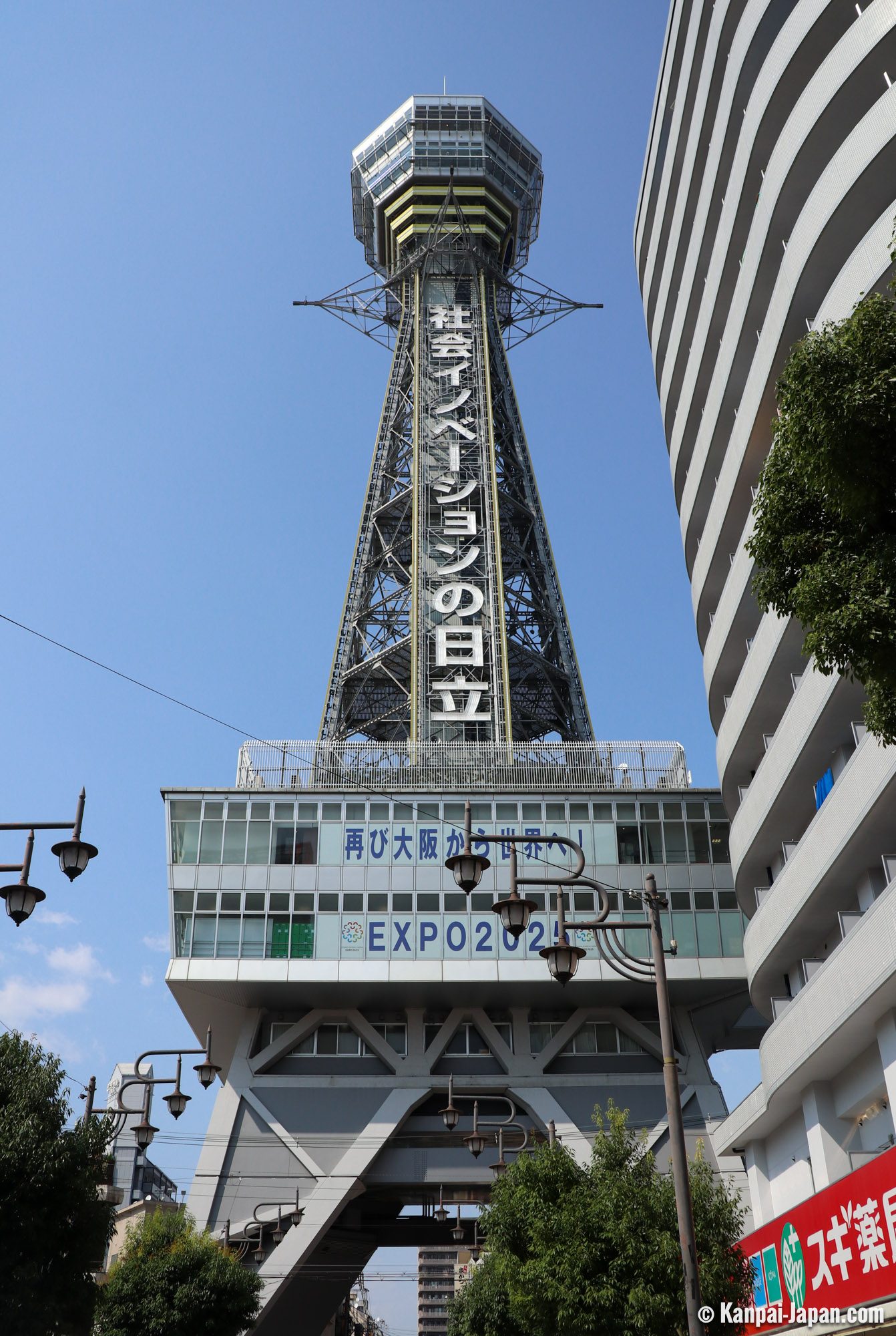
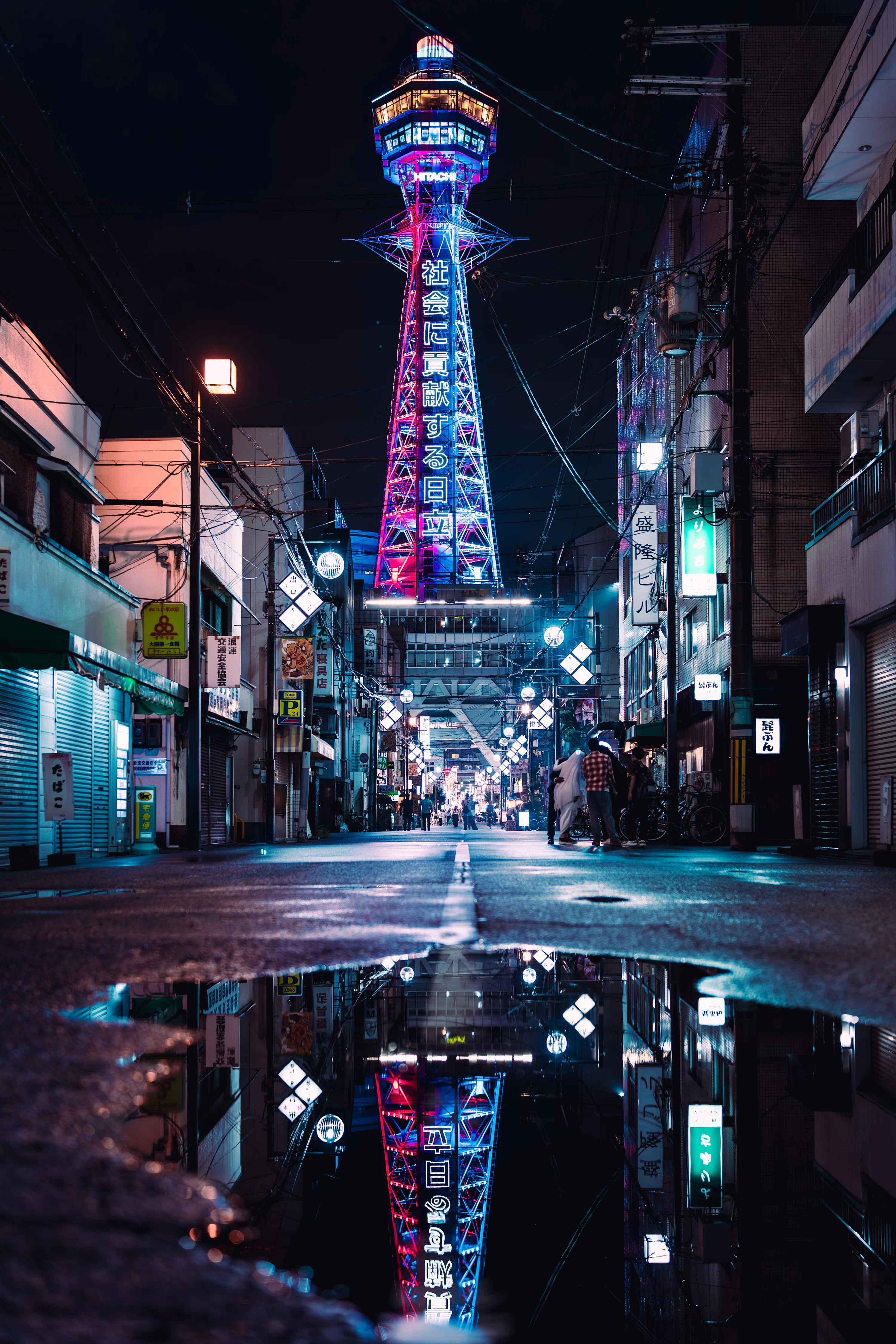
This iconic tower stands 108 meters tall and serves as a symbol of the neighborhood. It is the perfect starting point for any osaka food tour night
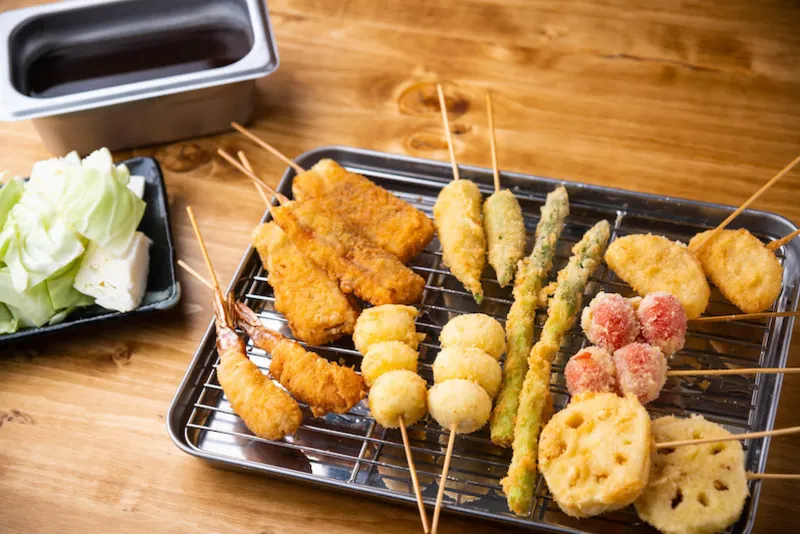
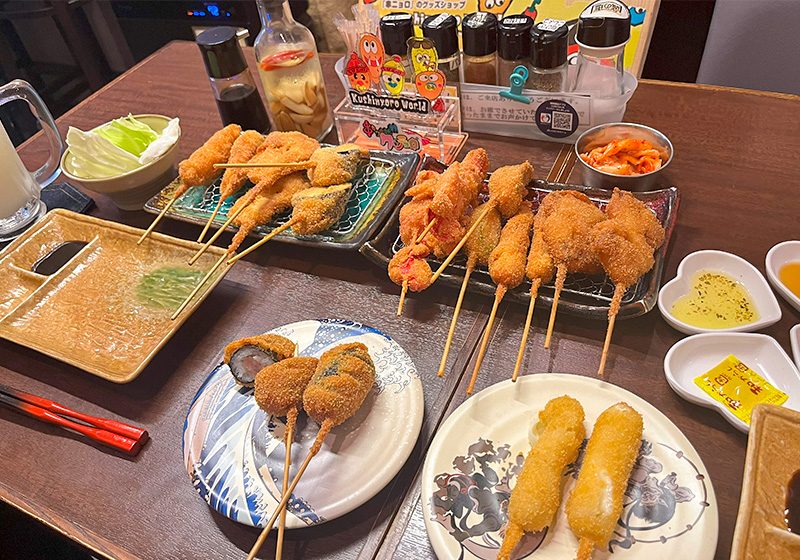
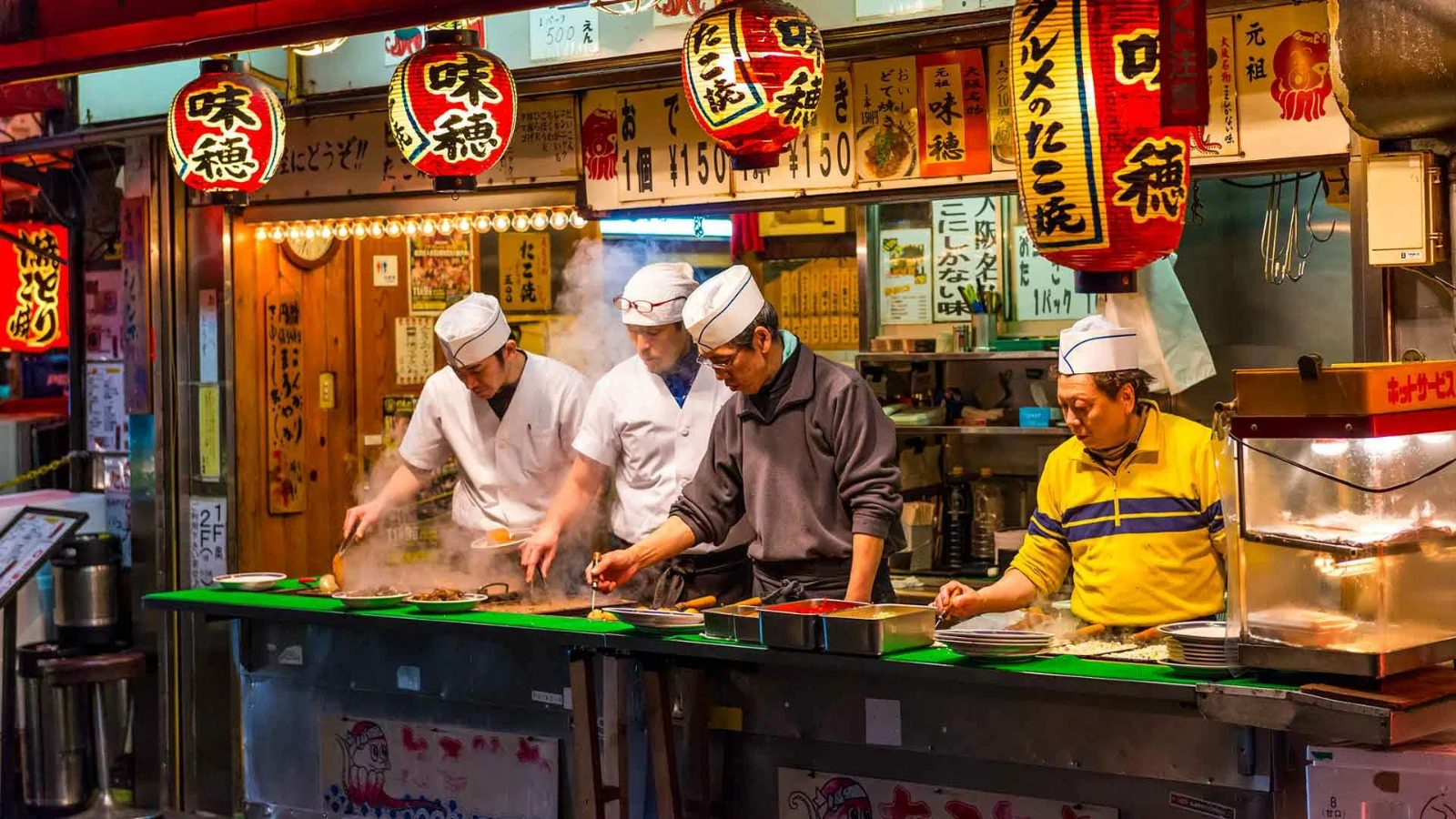
These small eateries specialize in deep-fried skewers that are a staple of local cuisine. Vendors fry over 30 varieties of meat and vegetables nightly
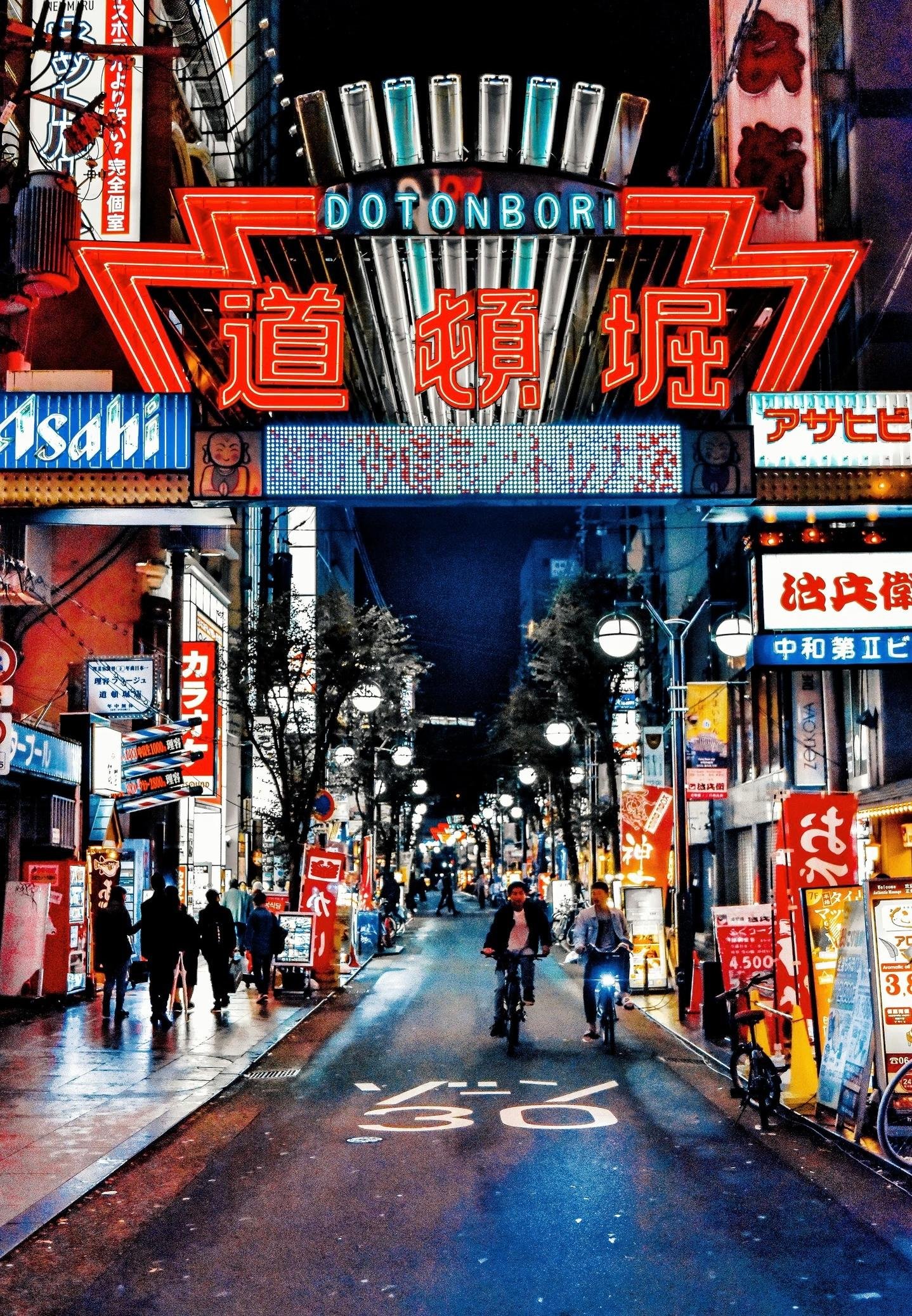
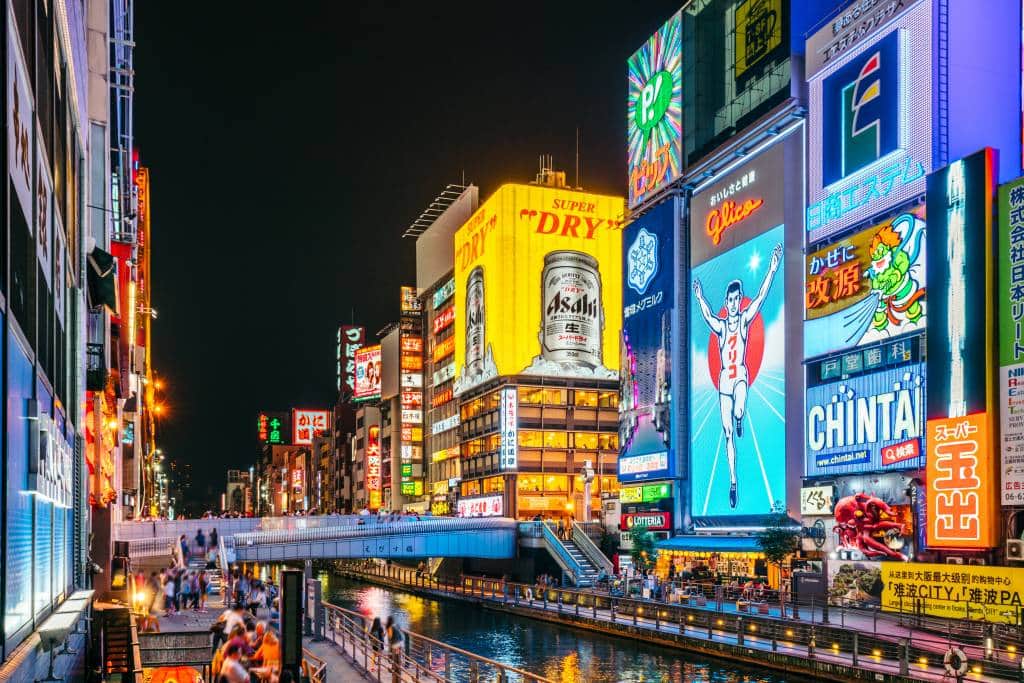
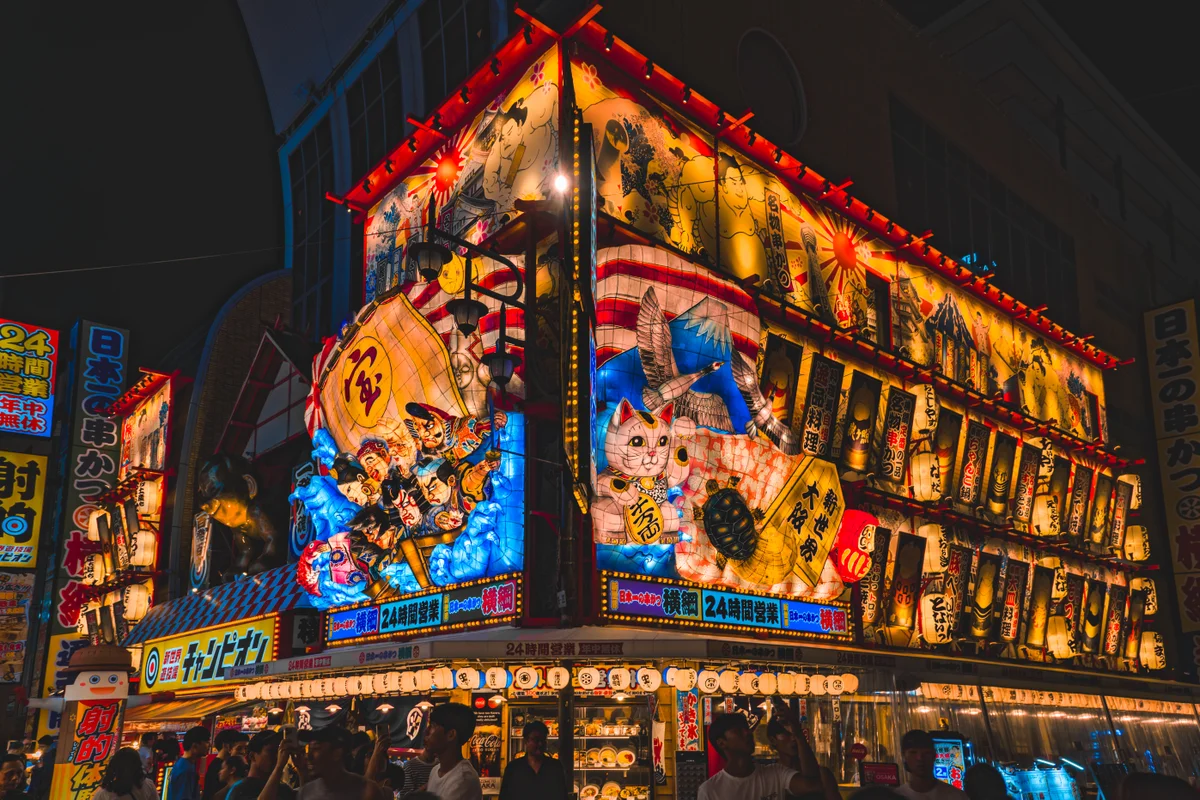
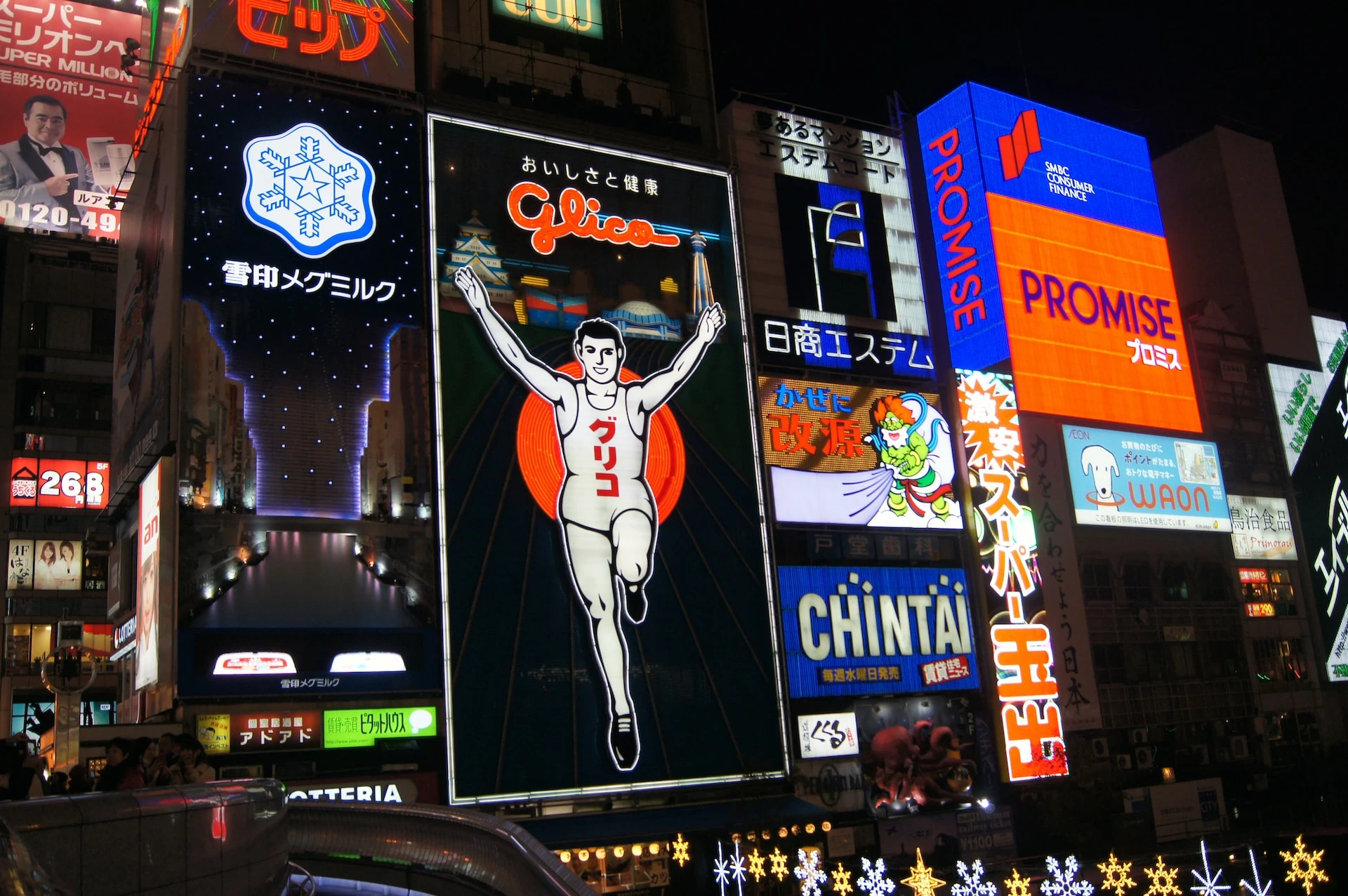
This famous neon sign is a major highlight during evening walks. The sign has been a city landmark since 1935
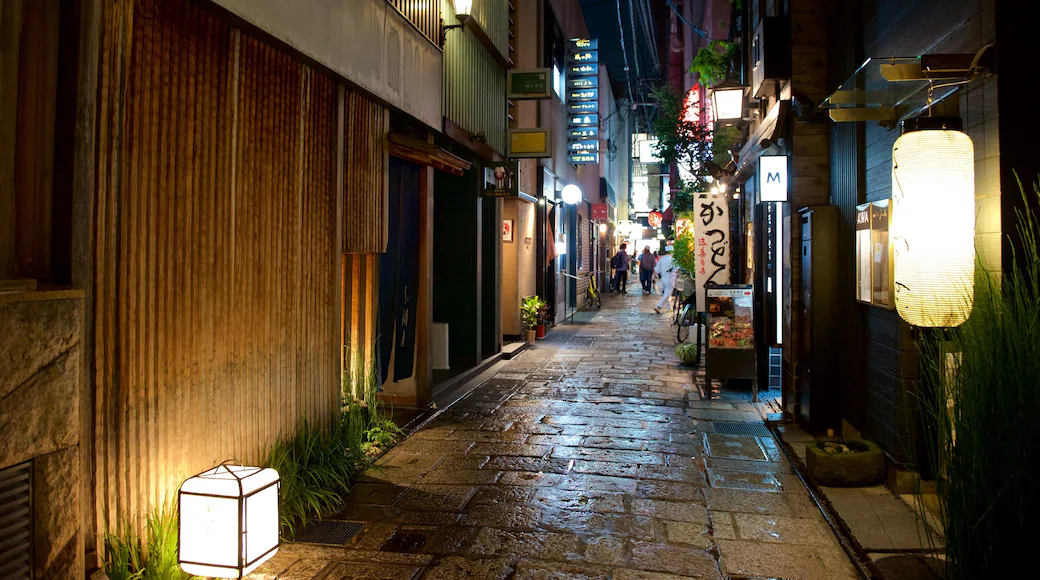
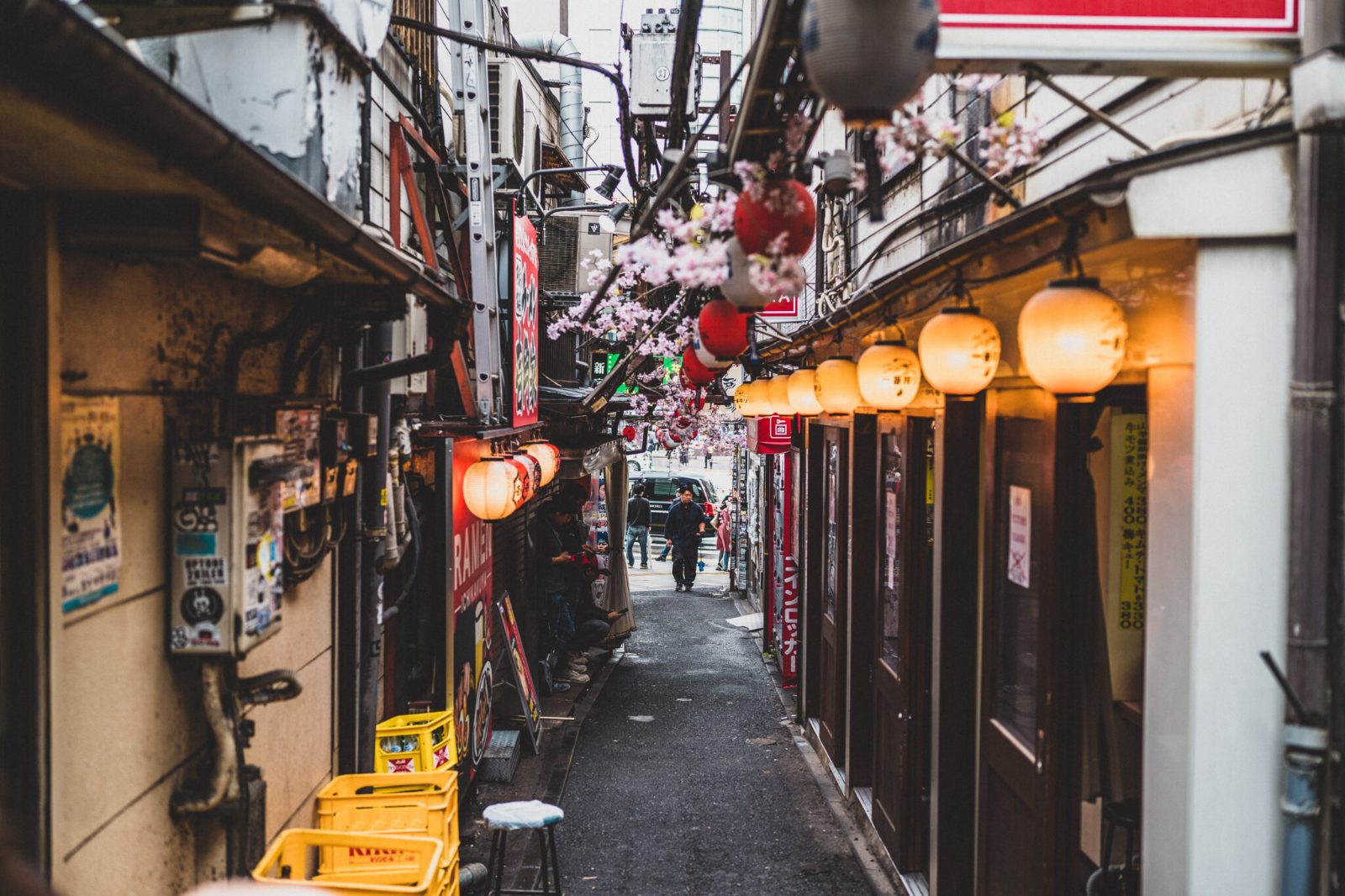
A narrow, stone-paved alleyway that maintains a traditional atmosphere. It is hidden away from the main neon-lit streets
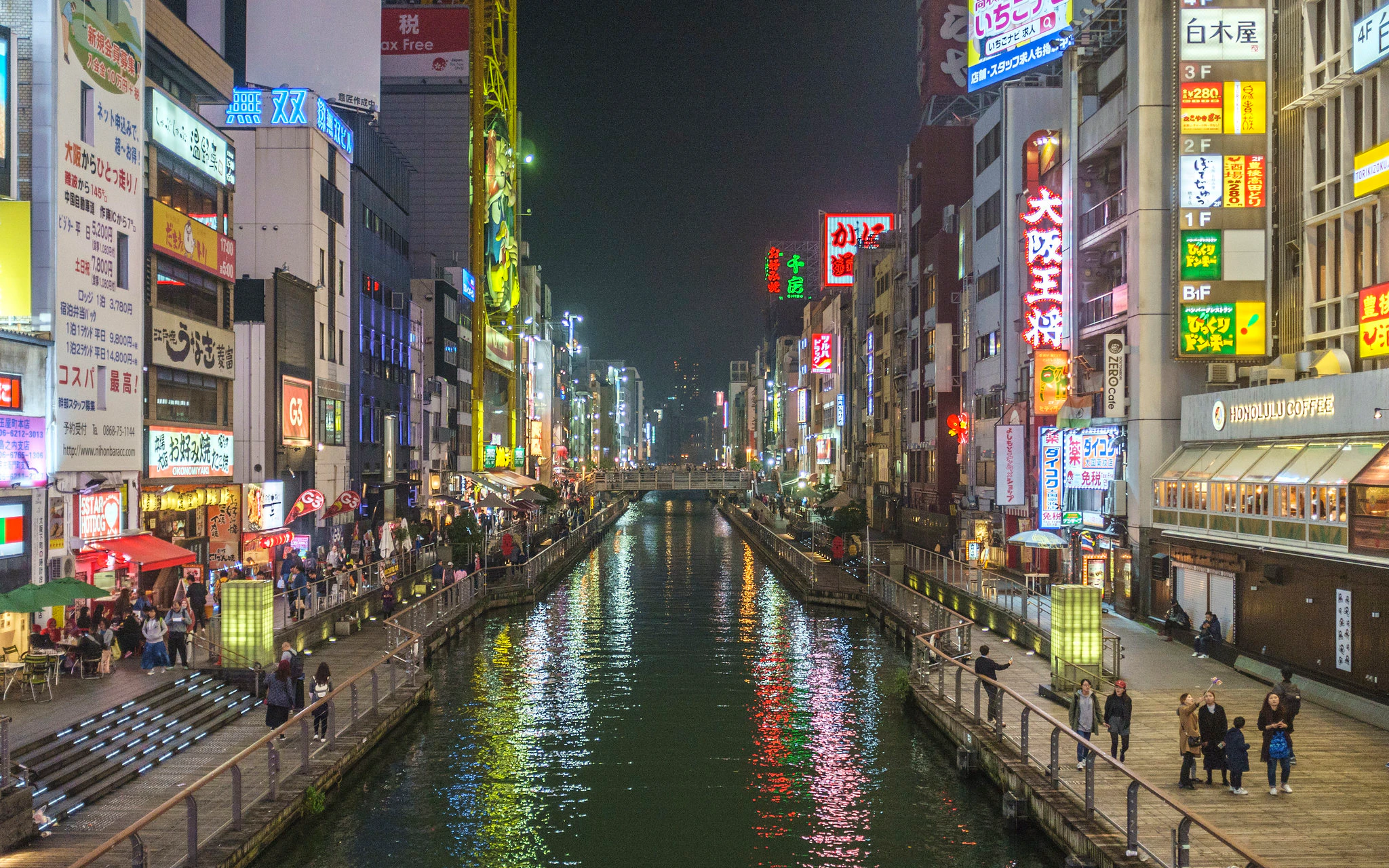
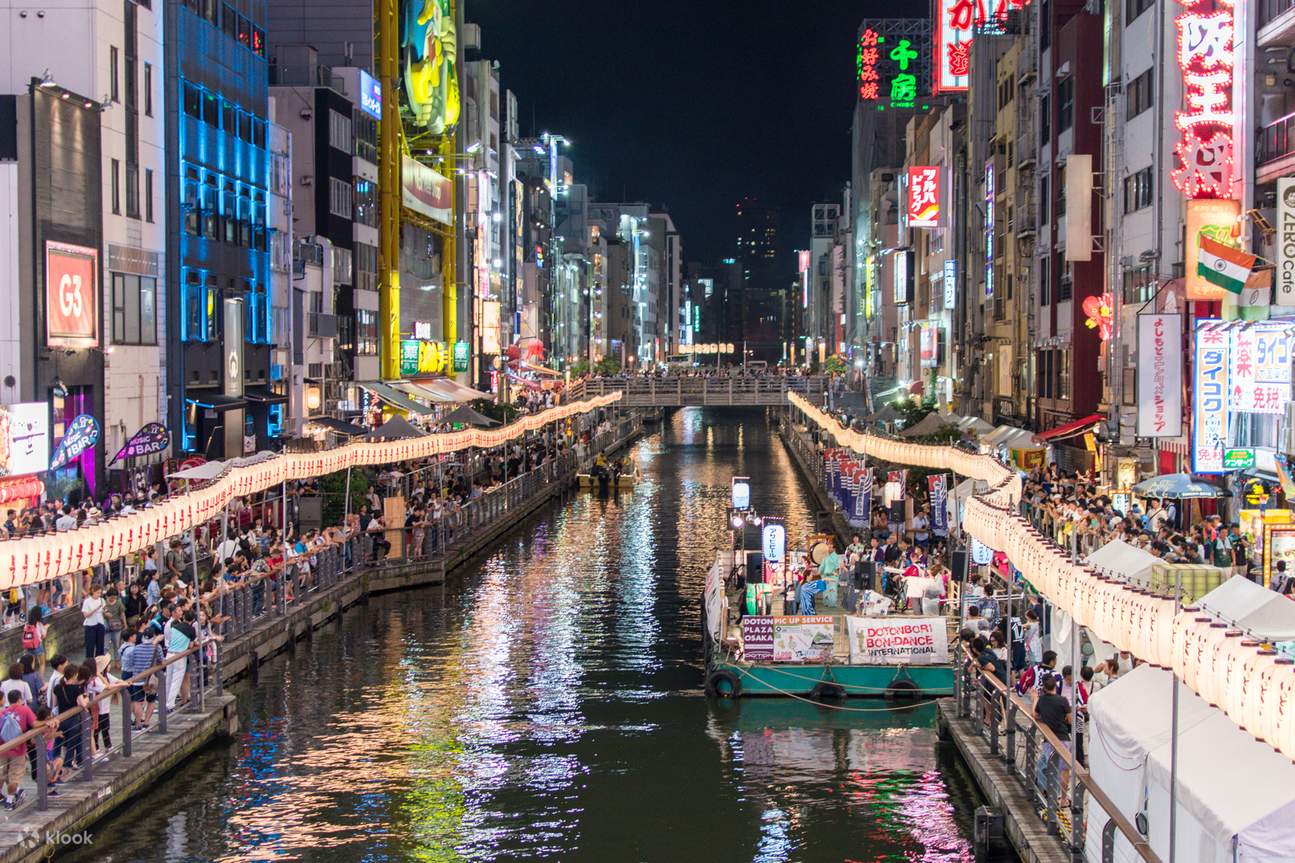
This bridge serves as a popular gathering spot for locals and visitors. It offers excellent views of the canal and neon lights
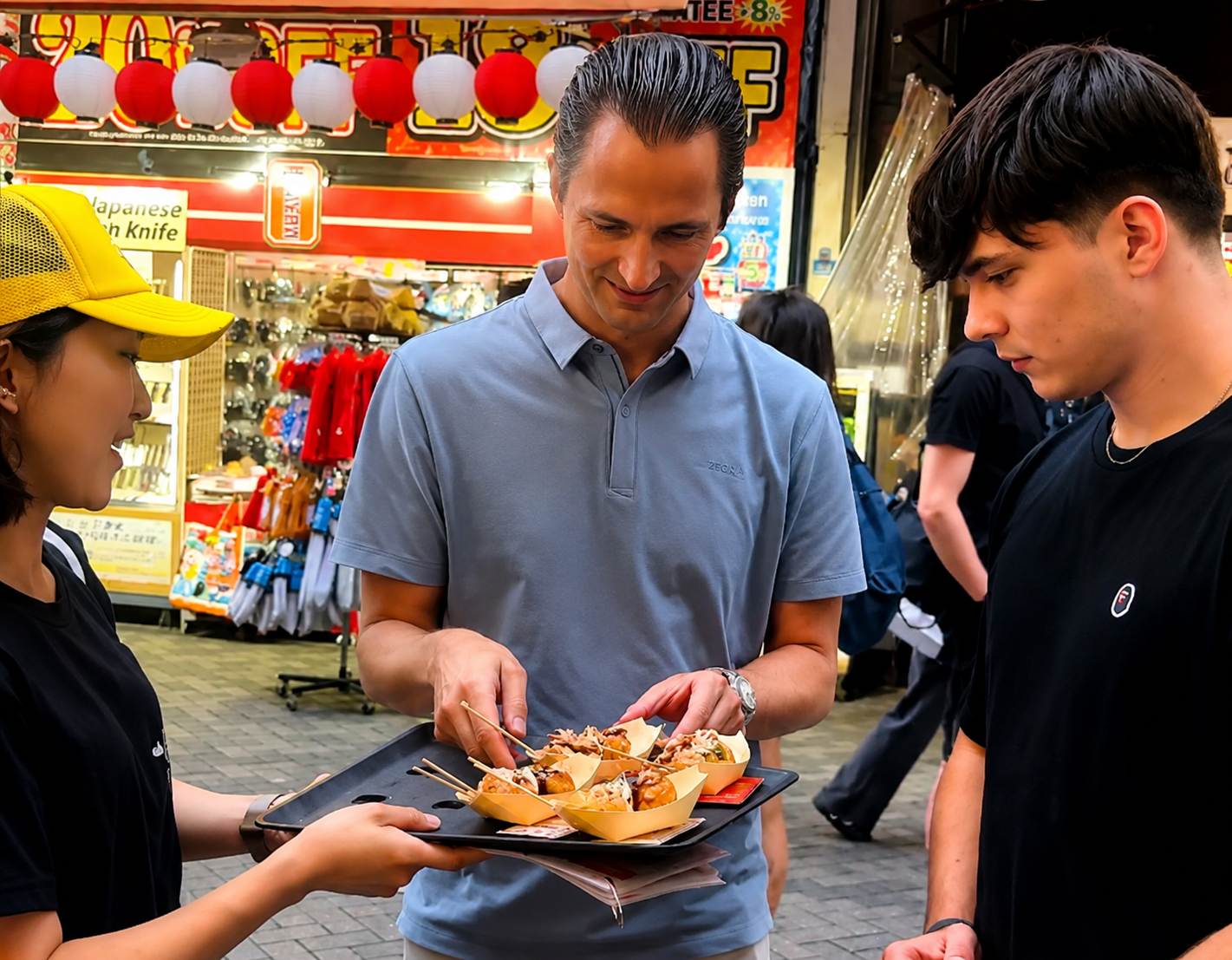
You meet your guide at Tsutenkaku Tower as the evening lights come on and the first kushikatsu vendors fire their fryers. The group is small — eight to ten people — and the pace is deliberate, each stop lasting ten minutes while you stand at counters or lean against chest-height tables.
The first skewer arrives hot, breaded pork with a cabbage side, followed by lotus root and quail egg, all dipped once in communal sauce under a sign that forbids double-dipping. Two blocks south you pour your own beer from a table tap and pair it with gyoza that arrives on a cast-iron plate, the dough crimped by hand that afternoon.
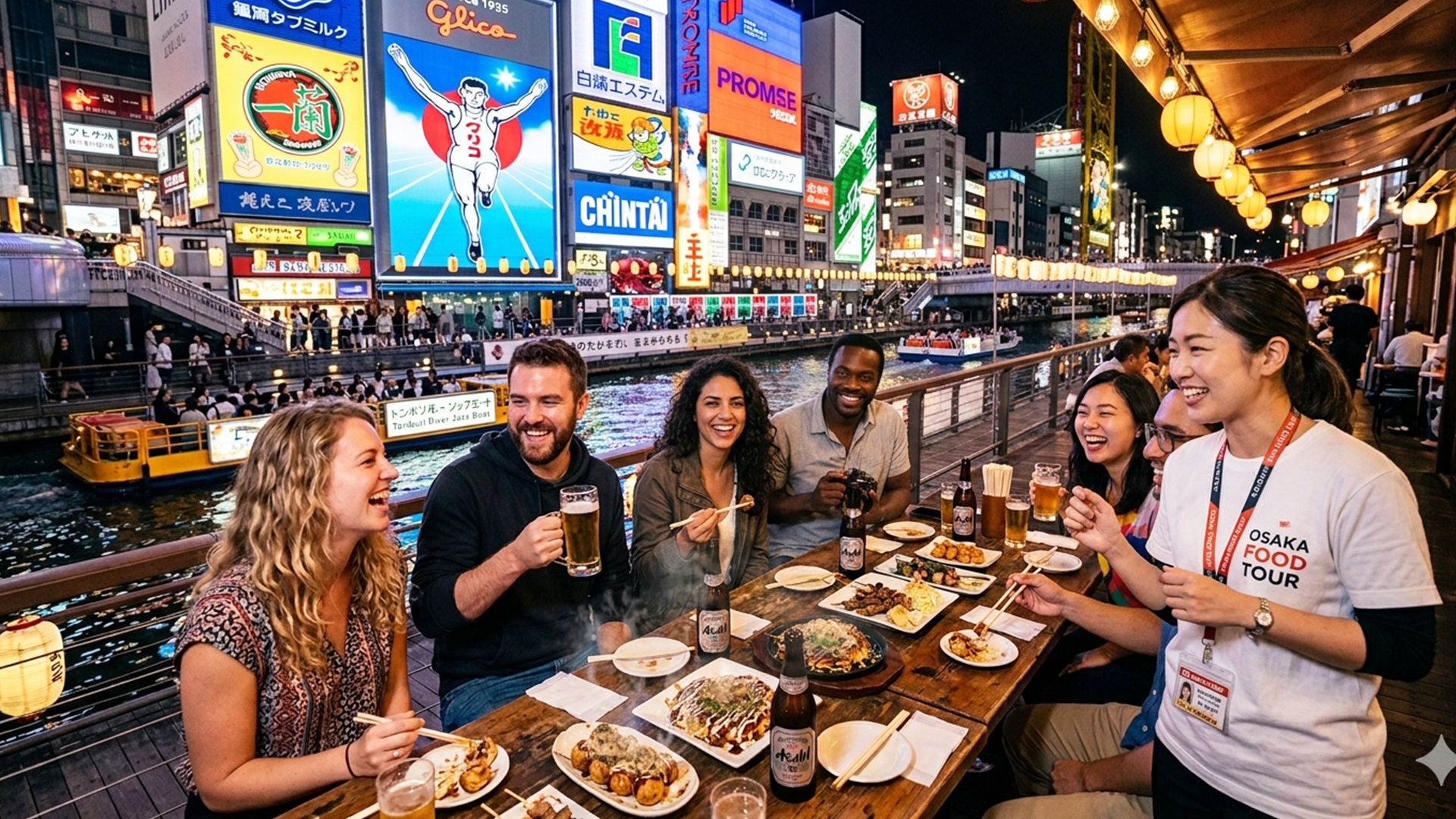
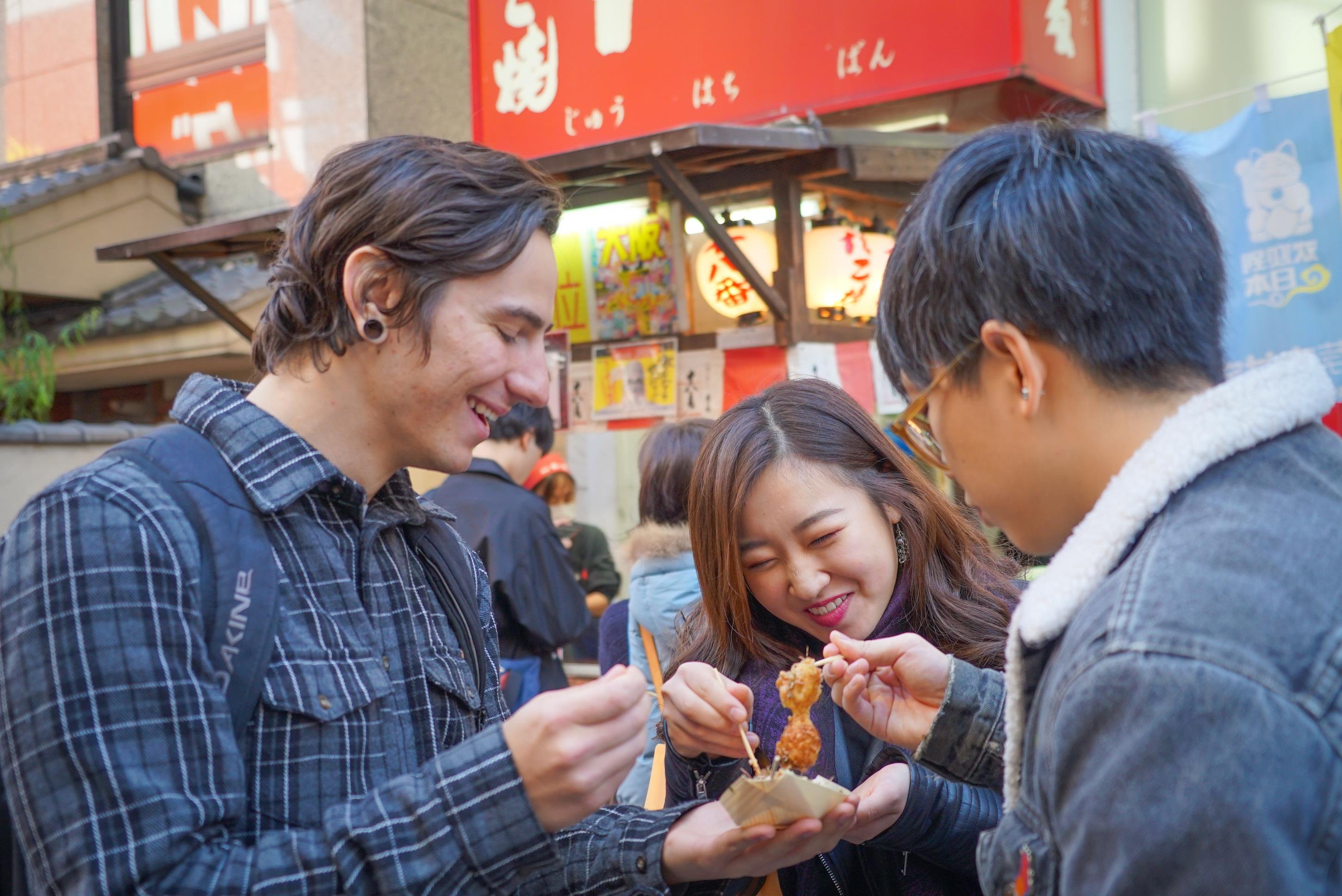
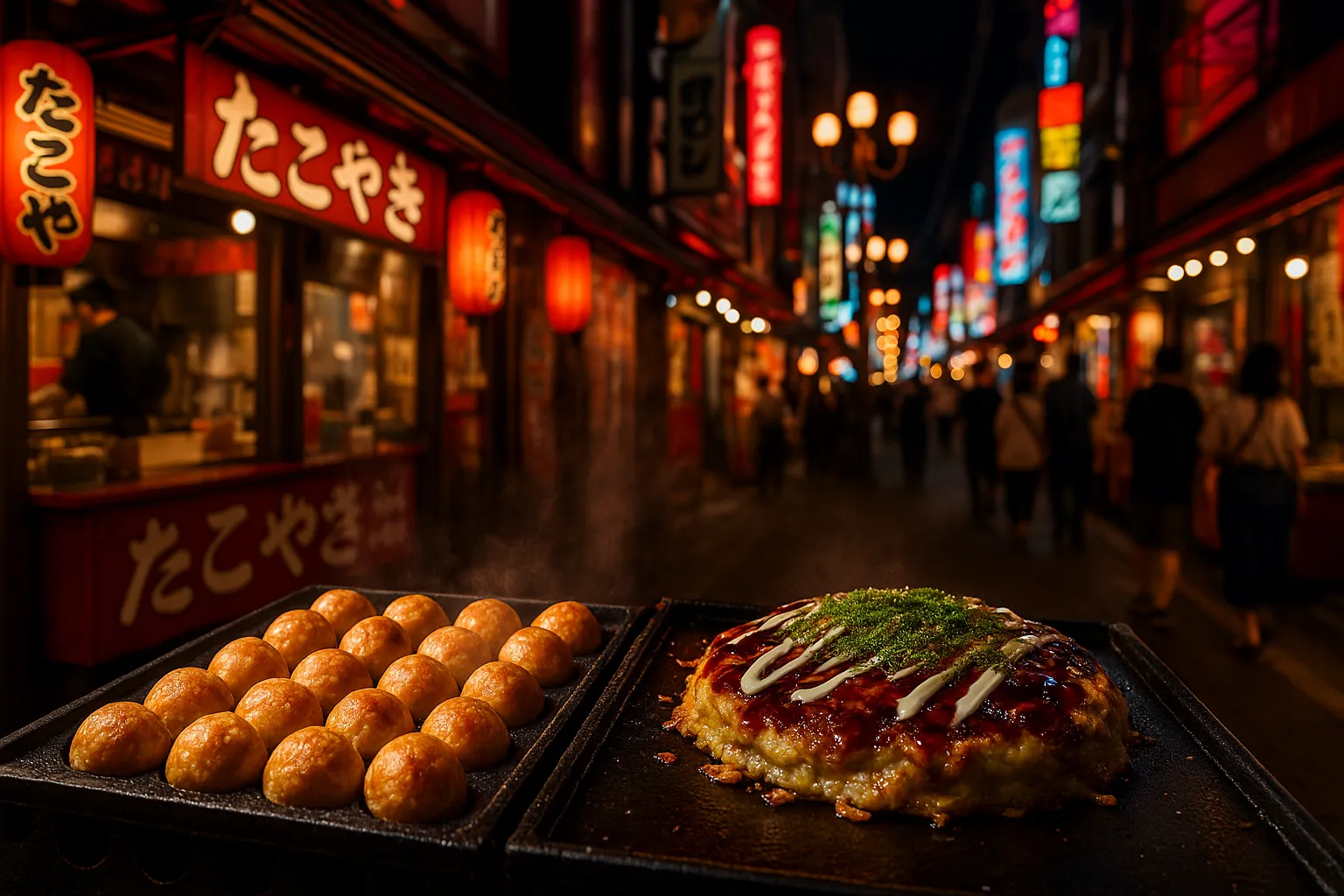
The walk shifts northeast toward Dotonbori, crossing under the expressway and emerging at the canal where the Glico sign pulses above the water. Here the density increases: takoyaki griddles send smoke into the arcade, ramen shops post their bowls in backlit photos, and you queue for okonomiyaki cooked on a teppan while you watch. The guide orders in Japanese, points out the bonito flakes moving in the heat, and hands you a wooden paddle to eat from the grill. The final stop is a standing sake bar where you taste three regional pours and a plum wine served cold. By nine the group disperses at Namba Station, the osaka food tour night tickets having covered fifteen dishes, three drinks, and two miles of Osaka's densest culinary corridor.
All the details about your upcoming adventure in one place
Osaka earned its nickname kuidaore — "eat until you drop" — in the Edo period, when merchant wealth and river trade turned the city into Japan's working kitchen.
By the 1920s Shinsekai had become a theater and dining district modeled on Paris and New York, its kushikatsu vendors frying skewered pork and lotus root in iron cauldrons under the newly built Tsutenkaku Tower. Dotonbori's neon corridor took shape in the postwar boom, when Glico's running man and the mechanical Kani Doraku crab rose above the canal to mark a culinary strip that now runs twenty-four hours. The districts remain anchored to street-level commerce: no white tablecloths, no reservations, just counter seating and cash registers that have rung since the Showa era.
Today an osaka food tour night stitches together both neighborhoods in a single evening, tracing the arc from Shinsekai's working-class fried fare to Dotonbori's ramen shops and takoyaki stands. The tours operate between six and ten in the evening, when vendor grills reach temperature and the sidewalks fill with office workers and tourists hunting okonomiyaki. Guides lead groups of eight to twelve through fifteen tasting stops, moving from kushikatsu to gyoza to sake pours served in ceramic cups at standing bars. The route is designed around density: Shinsekai packs thirty vendors into four blocks, and Dotonbori compresses a century of Osaka food culture into a half-kilometer walk along the water.
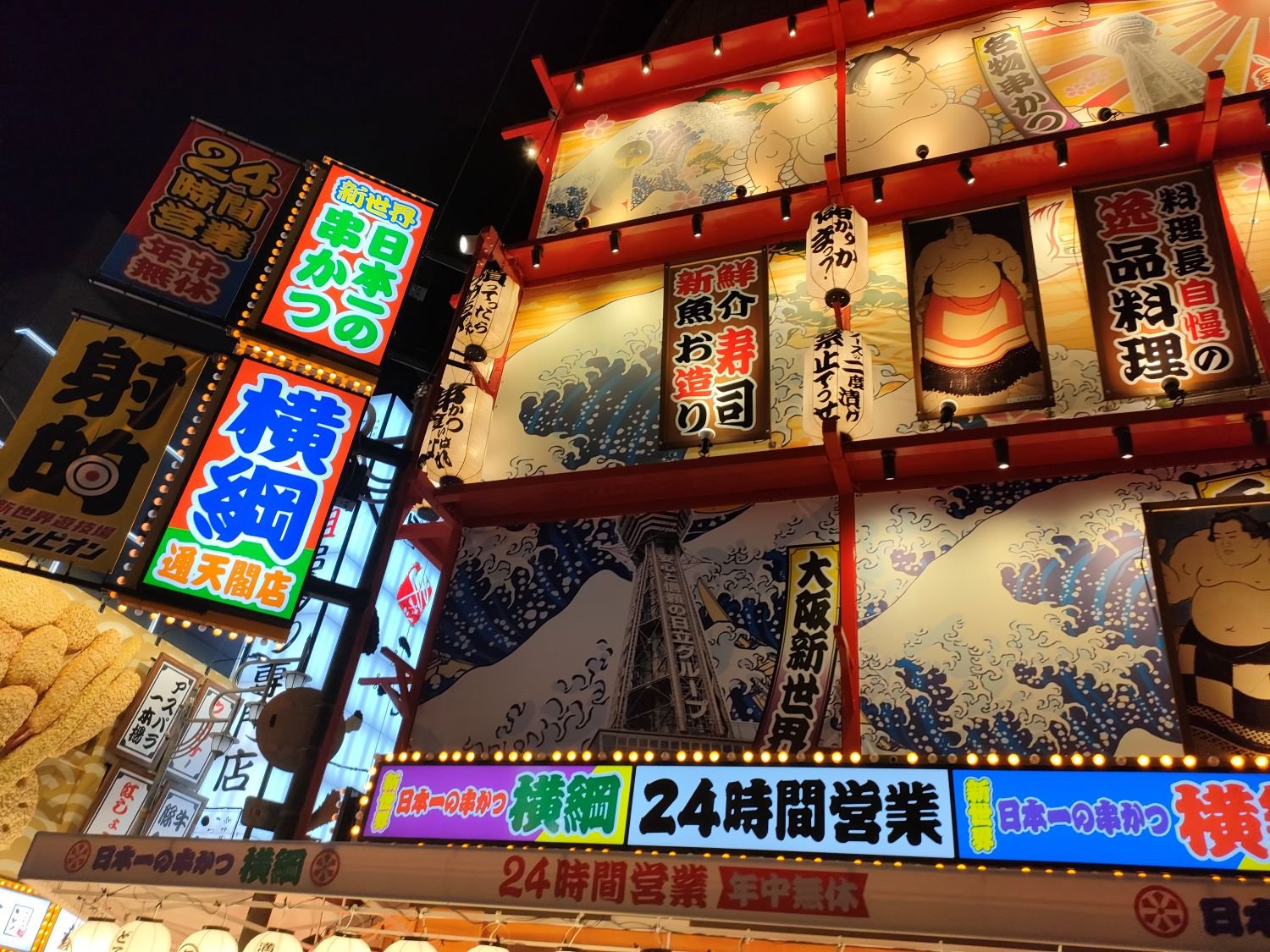
The architecture of both districts serves the food rather than framing it. Shinsekai's low-rise shopfronts date to the 1950s reconstruction, their eaves strung with red paper lanterns and hand-painted signs that advertise set menus in kanji and numbers. Dotonbori's facades carry three-dimensional sculptures — octopus, dragon, blowfish — that function as both advertisement and landmark, each one lit from within after dark. The canal itself, dredged in 1612 to connect the city's waterways, now reflects the LED billboards and creates a second plane of light that doubles the visual density. Together the two districts form a contained geography of Osaka's culinary identity, walkable in three hours and dense enough that an osaka food tour night tour can sample a dozen kitchens without backtracking. The experience remains vendor-driven: no演出, no fusion experiments, just the dishes that have anchored these blocks for sixty years, served on the same counters, fried in the same pans, and eaten standing under the same neon that welcomed the city's first postwar crowds.

Dotonbori compresses a century of Osaka food culture into a half-kilometer walk along the water.
Casual and comfortable walking attire is recommended for every osaka food tour night. Wear supportive footwear suitable for navigating busy pedestrian sidewalks.
Keep personal items secure in a crossbody bag during your osaka food tour night. Large luggage is discouraged due to the confined space of many local eateries.
Photography is generally permitted in public areas during an osaka food tour night. Please be respectful of shop owners and patrons when capturing neon signs or street life.
Families are welcome to join an osaka food tour night, though children should be able to manage walking long distances. Most vendors are accommodating, but high chairs are rarely available.
While the streets of Shinsekai are generally flat, some osaka food tour night locations feature small steps. Contact your specific operator if you require wheelchair-accessible dining.
The osaka food tour night focuses on tasting local specialties provided by vendors. Bringing outside food or drinks to partner shops is prohibited to support local businesses.
Opening Hours
00:00–23:59
Address
Shinsekai, Naniwa Ward, Osaka, Japan
Public Access
Street access
Best Arrival
18:00–21:00
Navigation
Local maps recommended
Public transport · 30 min · Variable
Use the Midosuji Line to reach the Naniwa Ward area easily. Local trains connect directly to stations near the osaka food tour night routes
Cancellations for an osaka food tour night require 24 hours notice for a full refund. No entrance fee of 0 JPY applies to the public areas explored during these tours.
Recommended time
3 hours
An osaka food tour night typically spans three hours, allowing visitors to explore Shinsekai street food and local nightlife dining at a comfortable pace. You should target the best arrival window of 18:00–21:00 to fully experience the vibrant neon lights and peak vendor activity. While osaka food tour night tours move through the area efficiently, crowds can intensify in popular corridors, so allow extra time if you plan to visit multiple Dotonbori landmarks. Those seeking flexibility with osaka food tour night tickets may find shorter transit times during the later segments of the evening.
Crowd levels through the day
Weather · crowds · average price — dots go green to amber to red as each metric rises.
September to November offers cool temperatures ideal for evening walks. This season features stable weather for exploring an osaka food tour night.
Carry a water bottle as evening walking tours involve significant activity. You will find vending machines throughout your osaka food tour night route.
Shinsekai, Naniwa Ward
Look for the guide holding an osaka food tour night sign
Get directionsShinsekai, the heart of osaka food tour night culture, emerged in 1912 as Osaka's vision of a utopian future. Built on land vacated after the Fifth National Industrial Exposition, the district split into northern and southern zones mimicking Paris and New York. Architects designed wide boulevards and imported novelties like the original Luna Park amusement complex, which featured Japan's first roller coaster. Tsutenkaku Tower, completed in 1912, stood as the tallest structure in Asia at 64 meters, symbolizing Osaka's industrial ambition and providing panoramic views across the newly electrified streets below. The district thrived through the 1920s but suffered catastrophic damage during World War II air raids. The original Tsutenkaku Tower was dismantled in 1943 for scrap metal. Post-war reconstruction in 1956 brought a new 103-meter tower, yet Shinsekai fell into economic decline as Osaka's commercial center shifted north to Umeda. By the 1970s, the neighborhood gained a reputation for poverty and crime, deterring mainstream visitors and osaka food tour night tours. Revitalization began quietly in the 1990s when local izakaya owners and kushikatsu vendors organized to promote the district's working-class food culture. The 2000s brought media attention to Billiken, the good-luck charm deity enshrined in Tsutenkaku, and television programs featured kushikatsu alley's double-dipping prohibition rule. By 2010, evening foot traffic surged as domestic tourists sought authentic street food experiences. Today, Shinsekai welcomes over three million annual visitors who navigate neon-lit lanes for deep-fried skewers, doteyaki beef stew, and hormone grills. The district exemplifies Osaka's culinary identity: affordable, unpretentious, and rooted in post-war resilience rather than imperial heritage.
Shinsekai district opens with Luna Park amusement complex and the original Tsutenkaku Tower.
Original Tsutenkaku dismantled for wartime metal; district suffers heavy bombing damage.
New 103-meter Tsutenkaku Tower rebuilt; post-war economic decline begins.
Local vendors organize to promote kushikatsu and working-class dining culture.
Media coverage of Billiken shrine and street food customs drives domestic tourism.
District attracts over three million annual visitors for evening osaka food tour night tickets and neon-lit dining.
Stand directly beneath the tower to capture the intricate steel lattice against the dark sky. This iconic Osaka landmark is a central feature for those joining an osaka food tour night.
Position yourself at the entrance of this historic narrow passage to photograph the contrast between vintage signage and modern neon. It offers an authentic perspective for visitors on an osaka food tour night tour.
Focus your lens on the exaggerated, brightly lit storefront displays featuring local culinary icons. These vibrant installations serve as excellent subjects for osaka food tour night tickets holders documenting their evening.
Stand on the Ebisu Bridge for the quintessential shot of the illuminated mascot reflected in the canal water. This area is a staple of Osaka landmarks for any evening excursion.
Exploring the vibrant Shinsekai district as part of an osaka food tour night offers families a sensory-rich experience filled with neon lights and local delicacies. Navigating these bustling streets provides a unique window into Japanese culinary culture for visitors of all ages.
The sidewalks in Shinsekai are generally flat, but narrow restaurant entrances and crowds can make navigating with a stroller difficult during peak hours. Consider a lightweight carrier for smoother movement during your osaka food tour night tours.
This evening experience is best suited for school-aged children who can handle later hours and diverse flavor profiles. Younger children may struggle with the fast-paced nature of an osaka food tour night tour.
Public restrooms are available within the district, though finding convenient baby-change tables can be challenging. Plan to utilize larger stations or hotel facilities before beginning your search for osaka food tour night tickets.
The area is compact, allowing for a relaxed walking pace between vendors. Build in frequent stops for kid-friendly treats to keep energy levels high throughout the evening.
Many street food stalls offer skewers and small bites that appeal to younger palates. Always confirm ingredients with vendors if your family has specific dietary restrictions.
Exploring Shinsekai offers a vibrant atmosphere near an osaka food tour night, where neon signs illuminate traditional eateries serving regional specialties. This area serves as a primary hub for casual dining, allowing visitors to easily navigate between bustling stalls and local taverns.
Famous for deep-fried skewers with a signature crispy batter. This establishment is a staple for those seeking authentic local flavors in a casual setting.
Widely recognized for its strict no-double-dipping policy regarding savory sauces. It is an ideal spot to experience classic Osaka comfort food while observing the lively evening crowd.
Offers a variety of meat and vegetable skewers served hot directly from the fryer. It provides a convenient stop during your Shinsekai culinary walk, making it perfect for groups looking for quick service.
Specializes in grilled dishes and savory okonomiyaki pancakes prepared on flat iron griddles. Guests can enjoy watching the chefs prepare meals, adding to the entertainment value of your osaka food tour night tours.
Focuses on grilled offal and high-quality meats, capturing the gritty, traditional soul of Osaka dining. It is a recommended choice for travelers wanting to engage with the city's robust nightlife culture through their osaka food tour night tickets.
Everything you need to know for your journey
The best arrival window is 18:00–21:00 to see neon lights and open vendors during your osaka food tour night.
The district is accessible 00:00–23:59, though tours operate during evening peak hours.
Public street access is free, meaning there is an entrance fee of 0 JPY for the area.
Yes, families are welcome, but confirm child-specific requirements for your osaka food tour night.
It is recommended to secure osaka food tour night tickets early due to high evening demand.
Most experiences last between 2 and 4 hours depending on the chosen osaka food tour night route.
Yes, you can take photos, but please be respectful during your osaka food tour night.
Operators can often accommodate requests if notified before your osaka food tour night begins.
Bring comfortable walking shoes and cash for any extras not included in your osaka food tour night.
An iconic observation tower offering city views. It is a central feature of the Shinsekai district landscape
Convenient access to local transport and dining
Join thousands of happy travelers who have discovered this incredible experience
Book Your Experience Now