

Quick answer
Osaka food tour price typically ranges from ¥8,000 to ¥18,000 per person for guided walking experiences lasting two to four hours. Shared group tours through Dotonbori or Kuromon Market cluster around ¥10,000–¥12,000, while private tours with deeper cultural context and more tasting stops run ¥15,000–¥18,000. Evening tours and sake-pairing experiences often carry a premium of ¥2,000–¥3,000 over daytime walks.
Osaka operates more street-food stalls per square kilometer than any other major Japanese city, and that density is both the draw and the cost driver for culinary tours. The osaka food tour price reflects not just the guide's time but the embedded cost of ten to fifteen small-portion tastings at independent vendors who do not offer bulk discounts the way ticketed attractions do. Shared group tours—typically capped at eight to twelve participants—spread the guide's fee across multiple bookings, which is why they hover near the ¥10,000 mark for a three-hour walk through Dotonbori or Shinsekai. Private tours command higher fees because the operator loses the ability to pool costs, but they unlock flexibility: you set the start time, choose the route emphasis, and move at a pace that accommodates questions rather than a fixed itinerary. Tours that include sake or craft beer pairings add ¥2,000–¥3,000 per person because alcohol service requires additional licensing and the guide must coordinate with izakayas rather than street stalls. Neighborhood choice affects cost structure more than most first-time visitors expect. Dotonbori is the most requested district, so operators schedule multiple departures and the per-person osaka food tour price remains competitive. Kuromon Market tours cost slightly less—around ¥8,000–¥9,000—because the market's vendor density allows guides to compress more tastings into less walking time. Shinsekai and Tsuruhashi, both rich in working-class food culture, are featured on fewer English-language tours, and the limited supply pushes prices toward ¥13,000 even for shared groups. Operators do not list taxes separately; the quoted figure includes Japan's ten-percent consumption tax. Group size for private bookings affects total outlay but rarely changes the per-person rate once you exceed four participants. Solo travelers pay a premium on private tours—often ¥25,000 flat—because the guide's time and vendor coordination costs remain fixed. The best arrival window for evening food culture in Dotonbori falls between 17:00 and 20:00, when izakayas open and neon signage reaches full intensity, and most operators schedule their flagship tours to that span without charging extra for the hour. Seasonal variation is minimal. Unlike cherry-blossom or autumn-foliage experiences that double in price during peak weeks, Osaka's culinary operators hold rates stable year-round because the food itself—takoyaki, okonomiyaki, kushikatsu—does not shift with the calendar. Booking directly with small operators rather than through aggregator platforms can trim ¥1,000–¥2,000 from the final cost, though cancellation terms are often stricter and English-language support varies.
“Osaka operates more street-food stalls per square kilometer than any other major Japanese city, and that density is both the draw and the cost driver for culinary tours.”
Understanding Osaka Food Tour Price Models
Osaka food tours are private commercial services rather than publicly operated attractions. Consequently, there are no government-regulated entrance fees for these experiences.
While city access is 0 JPY, visitors typically pay varying market rates for food tours based on the specific provider and inclusions.
Best Time for an Osaka Food Tour Price and Visit
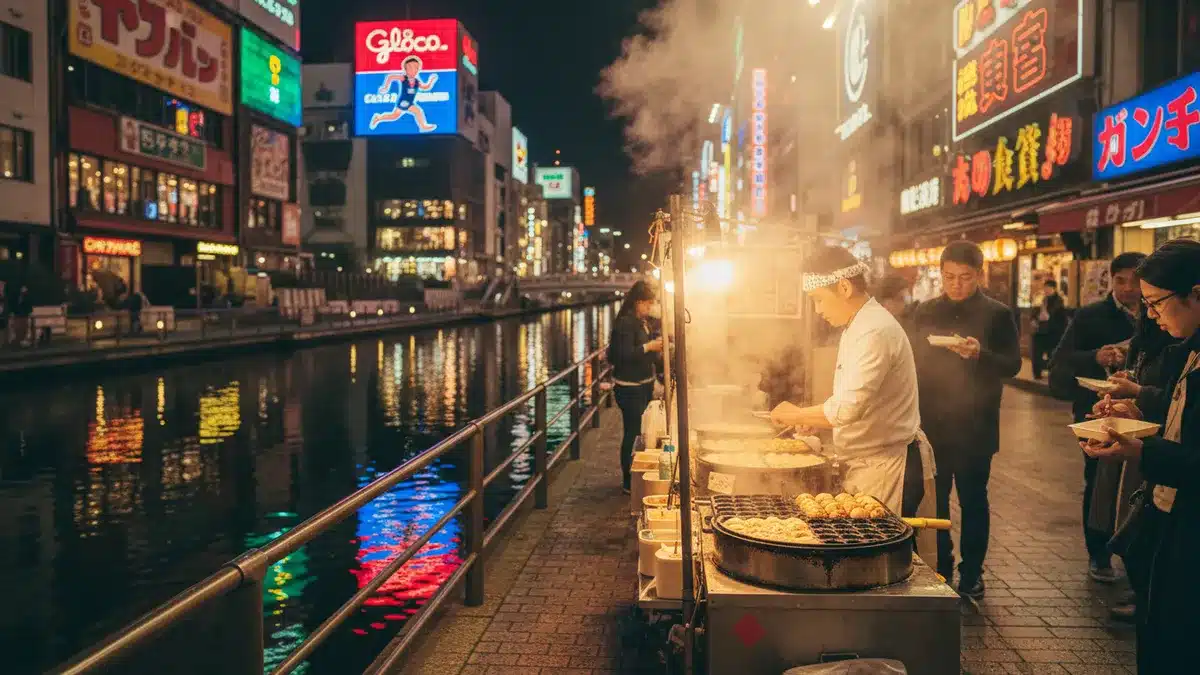
The best arrival window for experiencing Osaka's vibrant Dotonbori food culture is 17:00–20:00. Arriving during this period ensures food tour operators are active and the district is at its most energetic.
Spring (March–May)
HighMild (10°C–23°C). Consistent pleasant temperatures for walking.
Ideal for outdoor dining and comfortable exploration of street food stalls.
Autumn (October–November)
HighCool (12°C–22°C). Low humidity and clear skies.
Perfect weather for traversing multiple food locations on foot.
Summer (June–August)
Very HighHot and humid (24°C–33°C).
Expect peak humidity, though evening food tours remain active.
Winter (December–February)
ModerateCold (3°C–11°C).
Fewer crowds, though outdoor dining requires heavier clothing.
Verdict: The best time to experience an Osaka food tour is between 17:00 and 20:00 during the months of April or October.
Getting to Your Osaka Food Tour Location
Most Osaka food tours take place in the Dotonbori district, which is centrally located and easily accessible via the city's extensive public transportation network.
Midosuji Line to Namba Station
Kintetsu Line to Osaka-Namba Station
Walk from Namba Station to Dotonbori Canal
Tips for Planning Your Osaka Food Tour Price and Itinerary
Strategic planning helps maximize the value of your food tour experience in Osaka.
Book tours early
Private food tours in Osaka often reach capacity weeks in advance, especially during peak travel seasons. Securing your spot early ensures you have access to popular guides and desired time slots.
Confirm dietary needs beforehand
Communicate any allergies or dietary restrictions directly with the tour operator before booking. Many Osaka food vendors specialize in specific ingredients, making advanced notice necessary for substitutions.
Budget for personal add-ons
While tour packages typically cover specific tastings, carry extra yen for individual purchases. This allows you to buy additional portions or drinks if you find a specific dish you enjoy.
Arrive with an empty stomach
Portion sizes on guided food walks can be deceptively large due to the variety of stops. Plan your meals leading up to the tour to ensure you can sample everything provided.
Wear comfortable footwear
Osaka food tours involve significant walking through crowded districts and uneven alleyways. Practical shoes will keep you comfortable as you move between different tasting locations.
Check availability
Frequently asked questions about osaka food tour price
Everything you need to know about osaka food tour price