

Quick answer
An osaka food tour vegetarian itinerary typically runs two to four hours and covers Dotonbori's meat-free street vendors, Kuromon Market's tofu specialists, and the temple precincts near Shitennoji where shojin ryori restaurants operate. Tours are scheduled services booked through operators rather than walk-in venues, with most departures concentrated between late morning and early evening to align with market hours and restaurant service windows.
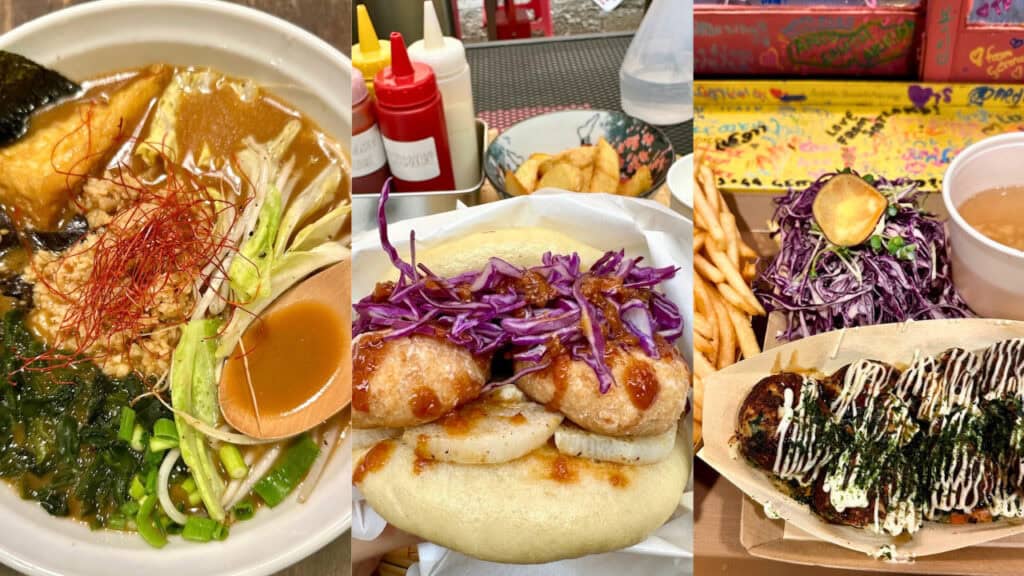
Fewer than eight percent of restaurants in Osaka explicitly label vegetarian options on their menus, yet the city's food culture has centuries-old roots in plant-based cooking. Shojin ryori, the Buddhist temple cuisine that prohibits meat, fish, and pungent vegetables, anchors the high end of the spectrum. At the street level, vendors in Dotonbori and around Kuromon Market offer takoyaki reimagined with konnyaku or shiitake, okonomiyaki built on cabbage and yam, and kushiage skewers of lotus root, eggplant, and sweet potato. An osaka food tour vegetarian route stitches these scattered offerings into a navigable sequence. The Kuromon Ichiba market district holds the highest concentration of tofu and yuba producers, many operating since the early twentieth century. Fresh yuba arrives each morning from workshops in the covered arcade, sold in sheets or as dense, custard-textured blocks meant for immediate consumption. Stalls along the western edge specialize in age-dofu variations: fried tofu pouches, skewered and glazed, or stuffed with pickled vegetables and sesame. These vendors do not advertise in English, and the visual cues—golden crusts, steaming bamboo baskets—guide more reliably than signage. Shitennoji temple's surrounding blocks contain three long-standing shojin ryori establishments that accept walk-in lunch service. The cooking here follows Tendai Buddhist principles: no onions, garlic, or leeks, and a strict alignment with the agricultural calendar. A spring menu centers fava beans, bamboo shoots, and mugwort; autumn brings chestnuts, matsutake, and persimmon. Portions are small, plating is minimal, and the meal unfolds across seven to nine courses. Expect to spend ninety minutes at the table. Vegetarian food tours in Osaka address a practical problem: locating meat-free meals in a city where dashi, the kelp-and-bonito stock, underpins nearly every sauce and broth. Guides fluent in dietary Japanese can confirm ingredient lists, negotiate substitutions, and identify the venues where plant-based cooking is a tradition rather than an accommodation. The route itself matters less than the interpreter who walks it with you.
“Shojin ryori follows the agricultural calendar with precision: bamboo shoots in spring, matsutake in autumn, and no ingredient out of season.”
Planning Your Osaka Food Tour Vegetarian Experience
This plan suits travelers seeking plant-based culinary experiences across Osaka's key dining districts. Allow a full day to explore markets, specialty restaurants, and temple cuisine without rush.
Kuromon Market exploration
Start at Kuromon Ichiba Market when stalls open, sampling fresh produce, yuba (tofu skin), and seasonal pickles. Budget 90 minutes to navigate the 580-meter arcade and speak with vendors about ingredients.
Dotonbori district arrival
Walk south to Dotonbori (15 minutes) and locate shojin ryori restaurants near Hozenji Temple. Many open for lunch service around 11:30; arrive early to secure seating without reservations.
Namba vegetarian dining
Explore concentrated vegetarian and vegan cafés in the Namba and Shinsaibashi shopping arcades. Lunch service peaks between 12:00–13:30; consider a lighter second meal or dessert stop.
Tennoji temple cuisine
Travel to Tennoji district (20 minutes by subway) to visit temples offering traditional Buddhist vegetarian meals. Some require advance booking; confirm availability if planning a formal kaiseki experience.
Umeda modern plant-based
Head north to Umeda's restaurant floors in major department stores, where contemporary vegetarian and macrobiotic restaurants serve dinner from 17:30. Book ahead for popular venues during weekends.
Insider Tips for Your Osaka Food Tour Vegetarian Adventure
Navigating Osaka as a vegetarian requires clear communication and awareness of traditional Japanese ingredient foundations.
Carry a dietary card
Use a physical card written in Japanese specifying your dietary restrictions to show staff when entering restaurants. This removes ambiguity in busy kitchens where language barriers exist.
Beware of hidden dashi
Dashi, a soup stock made from fish, is a common base in many Japanese dishes like miso soup, tempura batter, and noodle broths. Explicitly ask if dashi is used in the preparation of your food to ensure it meets your requirements.
Learn the correct terminology
Memorize the phrase 'niku ya sakana wa taberaremasen', which means 'I cannot eat meat or fish'. This is more effective than simply asking for 'vegetarian' food, which is not always understood the same way.
Use ingredient-scanning apps
Download specialized apps designed to scan food labels for hidden animal-derived ingredients like bonito or lard. These tools provide quick insights when you are unsure about pre-packaged items or complex menu descriptions.
Confirm soy sauce ingredients
While soy sauce is plant-based, some varieties may contain fish-based additives or be processed in facilities shared with non-vegetarian ingredients. Always confirm with the server that the soy sauce being used is suitable for your diet.
Accessibility Considerations for an Osaka Food Tour Vegetarian Trip
Osaka's traditional food districts often feature compact venues with narrow staircases and limited floor space, which can present challenges for travelers with mobility needs. We recommend contacting tour operators in advance to confirm venue layouts and discuss specific requirements before booking.
Many traditional eateries have narrow entrances or stairs.
Major transit hubs are accessible, but older alleyways may be uneven.
Small, older buildings often lack elevators for upper floors.
Available at larger stations and modern malls, but rare in small venues.
Operators can provide written materials or extra assistance if notified early.
Operating Schedule for Osaka Food Tour Vegetarian Services
Vegetarian food tours in Osaka are scheduled services rather than fixed-venue operations. Availability depends entirely on specific tour operator bookings.
| Monday | Closed | |
|---|---|---|
| Tuesday | Closed | |
| Wednesday | Closed | |
| Thursday | Closed | |
| Friday | Closed | |
| Saturday | Closed | |
| Sunday | Closed |
Check availability
Frequently asked questions about osaka food tour vegetarian
Everything you need to know about osaka food tour vegetarian