

Quick answer
Osaka is known for takoyaki (octopus-filled batter balls), okonomiyaki (savory cabbage pancakes), and kushikatsu (deep-fried skewers), three dishes that emerged from the city's working-class neighborhoods and street-food culture. The concept of kuidaore—eating yourself into ruin—captures the local attitude toward food as entertainment rather than mere sustenance. Most signature dishes are served in casual yatai stalls or standing-room counters rather than formal restaurants.
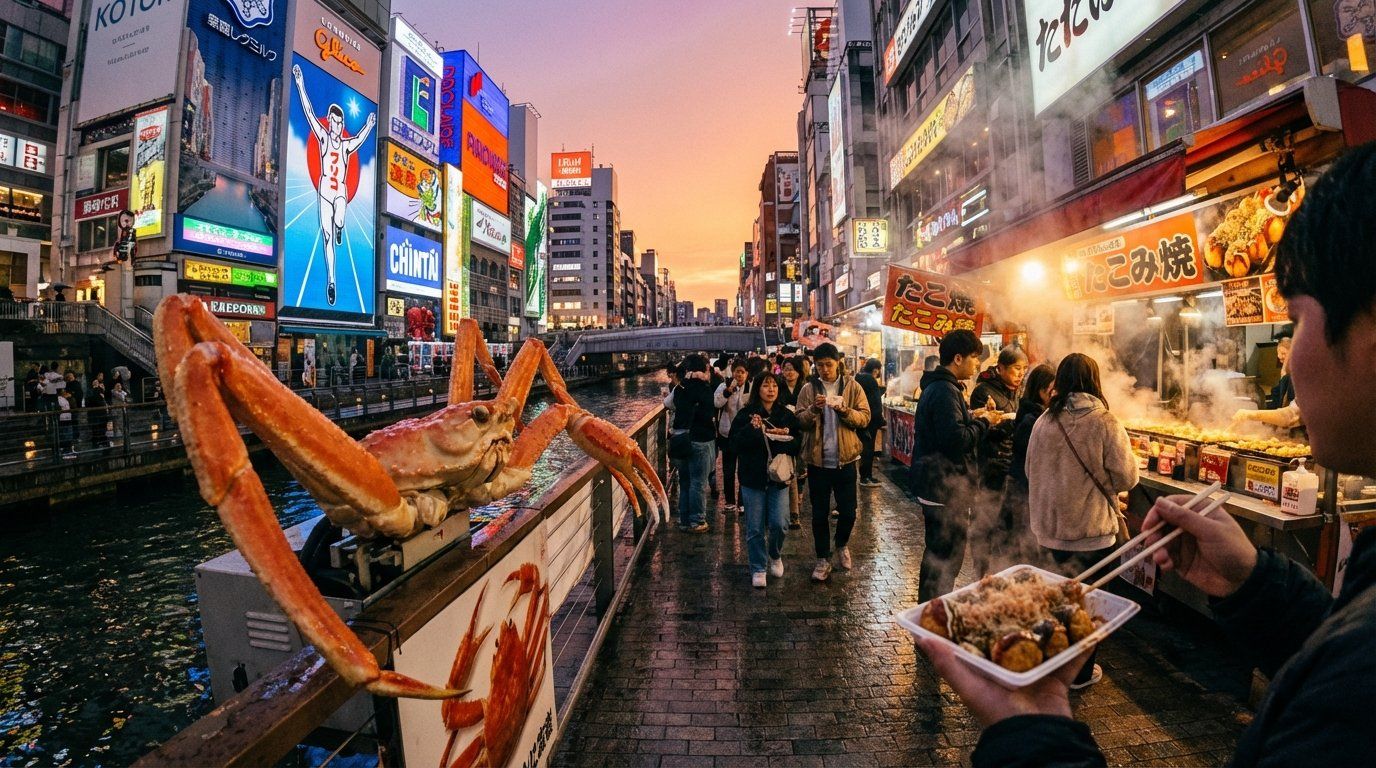
The phrase kuidaore translates to "eat until you drop," and Osaka residents use it without irony. The city's culinary reputation was built on merchant-class pragmatism during the Edo period, when Osaka controlled Japan's rice trade and developed a food culture centered on value, bold flavor, and social eating rather than ceremony. Takoyaki originated in 1935 when a street vendor in Nishināri Ward adapted a similar snack by adding octopus chunks to wheat-flour batter, cooking the mixture in specialized molded pans, and topping it with Worcestershire-style sauce and bonito flakes that writhe from residual heat. Okonomiyaki followed a parallel path—its name means "grilled as you like it"—allowing diners to customize cabbage-based pancakes with pork, seafood, or cheese on flat griddles built into restaurant tables. Kushikatsu, the third pillar of Osaka food culture, consists of skewered meat and vegetables dipped in panko breadcrumbs and fried in shared oil, governed by the strict social rule that double-dipping into communal sauce is forbidden. What food is Osaka known for extends beyond these three anchors to include doteyaki (beef sinew braised in miso), kitsune udon (thick noodles with sweetened fried tofu), and hagashi sushi (pressed mackerel on vinegared rice). The Dotonbori district along the canal remains the geographic center of this eating culture, where the Glico running man sign overlooks dozens of restaurants displaying oversized crab and pufferfish sculptures. The area operates every day from early morning through late evening, with peak energy between 11:00 and 20:00 when commuters, students, and tourists queue at standing counters. Osaka's approach to dining rejects the refinement of Kyoto kaiseki or Tokyo omakase. Portions are generous, prices remain accessible, and the atmosphere skews loud and convivial. Locals eat takoyaki while walking, grill okonomiyaki at their own tables, and rotate through kushikatsu selections at U-shaped counters where chefs fry skewers in real time. The city's food identity is inseparable from its street-level geography and the social rituals encoded in communal sauce bowls and shared griddles.
“The city's culinary reputation was built on merchant-class pragmatism during the Edo period, when Osaka controlled Japan's rice trade and developed a food culture centered on value, bold flavor, and social eating rather than ceremony.”
Best Time to Experience What Food Is Osaka Known For
The optimal time to experience the culinary landscape of Dotonbori is between 11:00 and 20:00, when street food stalls are fully operational and the iconic neon signage provides the signature atmosphere of the district.
Spring (March–May)
High crowdsMild temperatures, 10°C to 23°C
Spring offers comfortable walking weather for outdoor food exploration during the cherry blossom season.
Autumn (October–November)
High crowdsCool and crisp, 12°C to 20°C
Autumn provides pleasant conditions and seasonal food availability, making it a favored time for visitors.
Weekday Mornings
Minimal crowds—
Visiting before 11:00 allows for shorter wait times at popular stalls, though peak neon lighting is not active.
Evening (18:00–20:00)
Peak crowds—
This window provides the highest energy and full illumination of the district's signage, coinciding with peak food stall activity.
Verdict: The best time to visit for the full atmosphere is weekdays between 11:00 and 20:00 during the months of April or October.
How to Get to the Center of What Food Is Osaka Known For
Dotonbori is located in Chuo Ward, Osaka, and is most easily accessed via the extensive Osaka Metro network. The area serves as the central hub for the city's food culture, centered at Dotonbori, Chuo Ward, Osaka, 542-0071, Japan.
Midosuji Line to Namba Station
Hanshin Line to Osaka-Namba Station
From Namba Station to Dotonbori canal
Opening Hours for What Food Is Osaka Known For in Dotonbori
The Dotonbori district is a public area accessible at all hours throughout the week. Visitors may explore the streets and food stalls regardless of the day.
| Monday | 00:00–23:59 | |
|---|---|---|
| Tuesday | 00:00–23:59 | |
| Wednesday | 00:00–23:59 | |
| Thursday | 00:00–23:59 | |
| Friday | 00:00–23:59 | |
| Saturday | 00:00–23:59 | |
| Sunday | 00:00–23:59 |
Check availability
Frequently asked questions about what food is osaka known for
Everything you need to know about what food is osaka known for